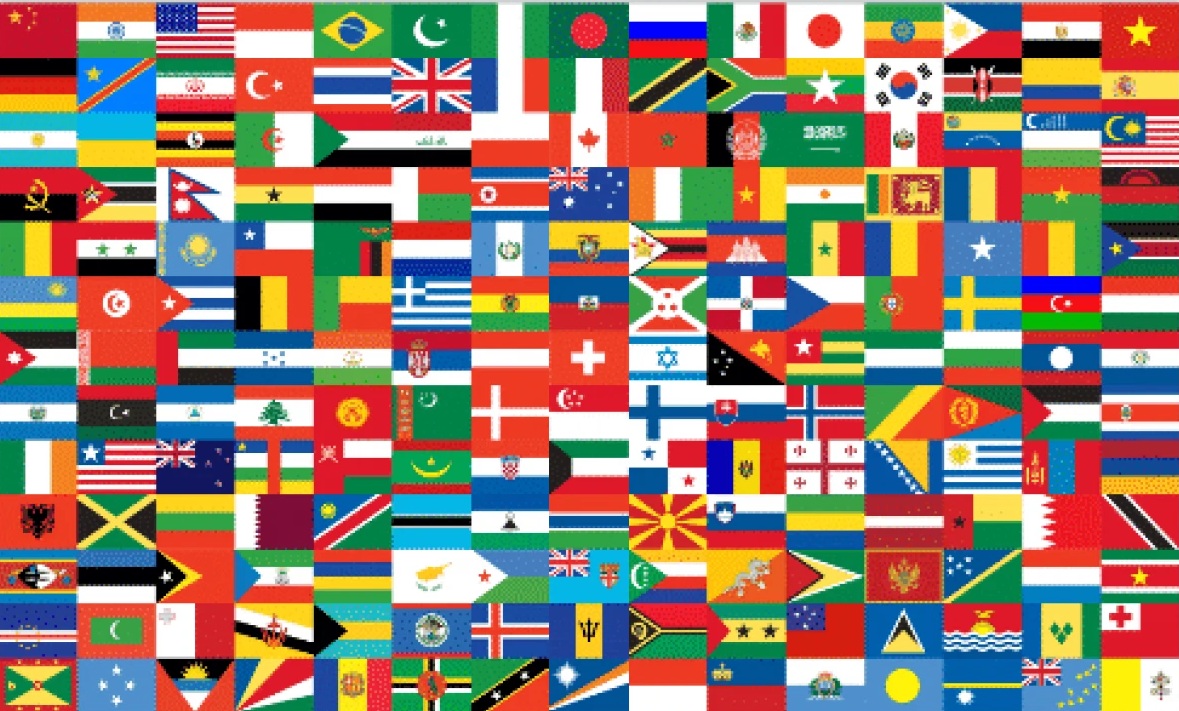
The visual landscape of international flag and banner study is dominated by a clear colour triad. Based on global flag design statistics and the composition of national flags (including backgrounds, stripes, emblems, stars, symbols, crescents and crosses), the three most commonly used colours are red, white and blue:
• RED – appears in over 75% of national flags worldwide.
• WHITE – is present in around 70%.
• BLUE – spanning light blue, sky blue, navy and royal blue shades, is found in approximately 50% of national flags.
The dominance of this specific combination is not a coincidence, but rather the result of historical necessity, shared symbolism and geopolitical influence.
In early heraldry and flag-making, options were constrained by the chemical availability of durable dyes. Red pigment, often derived from madder roots or cochineal insects, was among the most accessible and vibrant dyes across continents. Blue dyes, harvested from plants such as woad or indigo, were similarly reliable and resistant to fading. White required no pigment at all, achieved simply by using un-dyed or bleached natural fabrics like linen, cotton or wool.
Beyond practical manufacturing, these three colours carry powerful, virtually universal symbolic meanings across distinct cultures:
• RED – almost universally represents courage, revolution, vitality and the bloodshed by patriots.
• WHITE – signifies peace, purity, honesty, unity or a clear sky.
• BLUE – denotes justice, truth, freedom and natural elements, like the sea.
Because these core concepts are essential to the founding narrative of almost every modern state, red, white and blue naturally emerged as the primary palette to communicate national values.