
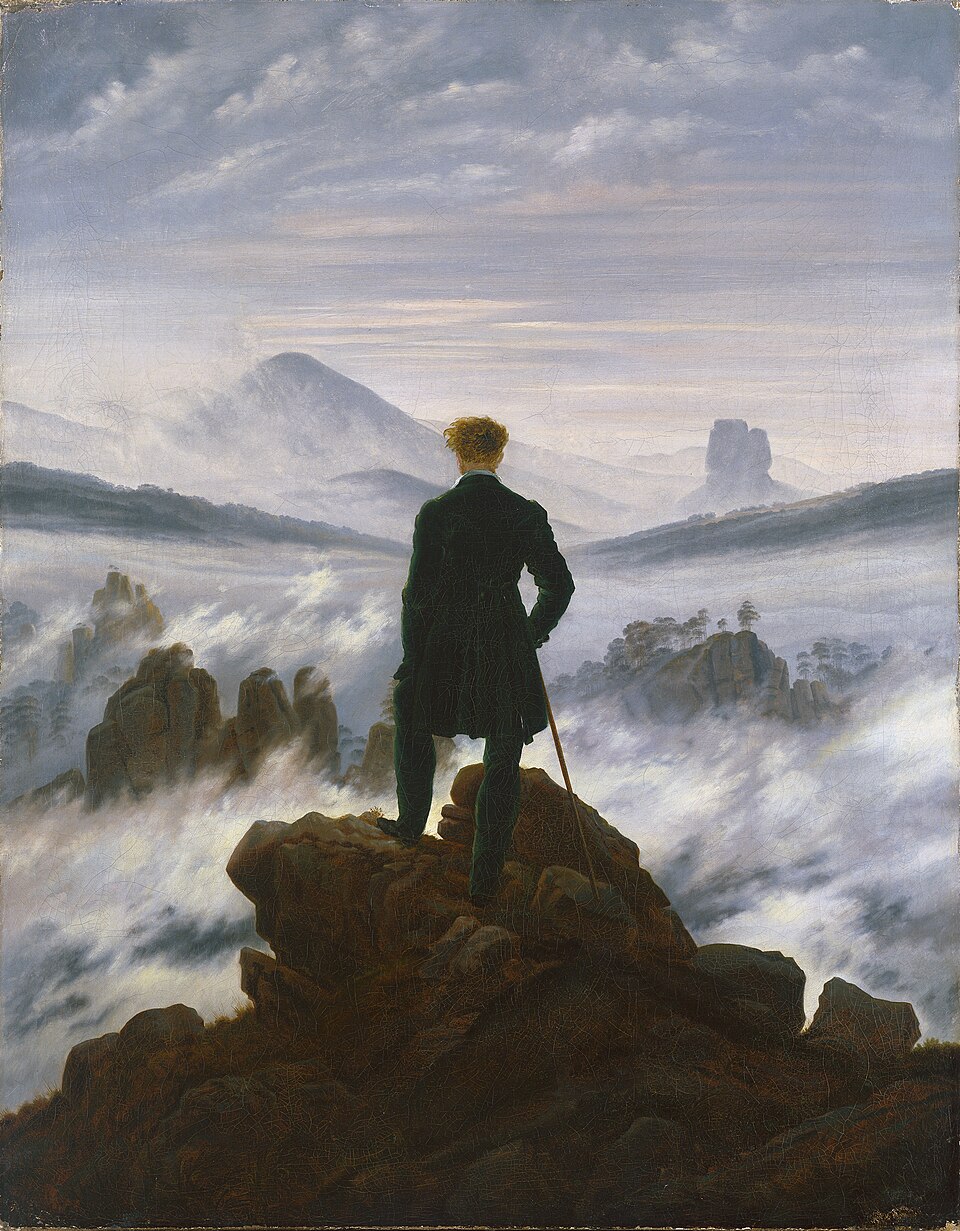
There is an impulse almost instinctive about wanting what we do not have. We can be surrounded by things we once hoped for and still find ourselves looking towards something beyond them: a different life, a different place, a different person or simply a matter we cannot quite name. It is tempting to describe this as believing that the grass is greener on the other side, as though human dissatisfaction were nothing more than poor judgement. Yet the desire for something else is more complicated than that. Sometimes we want what we cannot have because we imagine it will be better. At other times, we want it simply because it is unknown.
From childhood, we are drawn towards possibilities. A child playing with one toy notices another. A teenager imagines a future far removed from their present life. An adult may spend years working to achieve a particular goal only to reach it and discover that the attainment does not answer every question. This tendency is often treated as evidence of ingratitude. Why can we not simply be satisfied? But satisfaction and curiosity are not opposites. We can value what we have while remaining aware that it is only one possibility among many.
Humans are particularly capable of turning those possibilities into imagined lives. We can picture ourselves in another country, another career or another relationship without ever experiencing any of them. Because these imagined lives contain none of the inconveniences of reality, they can seem remarkably appealing. We picture the freedom without the loneliness, the excitement without the uncertainty and the success without the years of effort that might have produced it. In this sense, wanting something else is often less about knowing that another life is better and more about being able to imagine that it might be.
That is where the idea of the greener grass becomes useful, but also limited. We often compare our ordinary reality with someone else’s edited version of theirs. Other people’s achievements are visible to us while their doubts and disappointments usually are not. Social media has made this tendency especially difficult to escape. We can encounter hundreds of carefully selected glimpses of other people’s lives and begin to mistake those glimpses for complete realities. Wanting something else can therefore come from a distorted comparison rather than a genuine need.
But not every desire is envy. Sometimes we cannot point to another person’s life and say, ‘I want that.’ We simply have a feeling that there is more to discover. This can be difficult to explain because it does not always have a practical solution. We may have a comfortable home, good relationships and perfectly respectable work, yet still wonder whether there is something beyond the life we know. The discomfort comes not necessarily from having too little, but from being conscious of everything we have not experienced.
That awareness is intensified by the fact that human life is finite. Every choice closes the door on countless alternatives. If we study one subject, we do not study all the others. If we settle in one place, we do not discover what it would have been like to build a life somewhere else. Even a happy life contains roads not taken. It is natural to wonder about them, particularly when we know that we will never have enough time to explore every possibility.
There is, however, a danger in treating every desire as a command. The fact that something attracts us does not mean that pursuing it will make us happier. Sometimes wanting something else is simply a symptom of boredom or restlessness. Sometimes we are attracted to novelty because it has not yet had the opportunity to become difficult and ordinary. If we constantly abandon what we have whenever it stops feeling exciting, we may spend our lives pursuing beginnings and never discovering what comes after them.
The challenge, then, is to distinguish between desire and dissatisfaction. Wanting something different can reveal a genuine interest, ambition or need that deserves attention. But it can also be a way of avoiding the ordinary frustrations that exist in every life. The important question is not whether another possibility looks attractive, but whether we understand what we are actually longing for.
Perhaps this is what makes the desire for something else so distinctly human. We are not limited to responding to the world as it is. We can question it, imagine possibilities and wonder about roads we will never take. This ability has produced both our greatest triumphs and some of our deepest frustrations. The same imagination that allows us to dream of something better can make what we already possess seem insufficient.
To always want something else, then, is not necessarily to believe that the grass is greener. It is to live with the knowledge that there are countless ways a life might unfold and that we can experience only one of them. The answer is not to eliminate desire or to convince ourselves that what we have must always be enough. It is to understand our wanting more honestly.
Sometimes the grass really is greener elsewhere. Sometimes it only looks that way from a distance. And sometimes we are not interested in the grass at all. We simply want to know what is beyond the field. That impulse, restless and imperfect as it may be, is part of what makes us human.






Masterpiece of truths 🧡