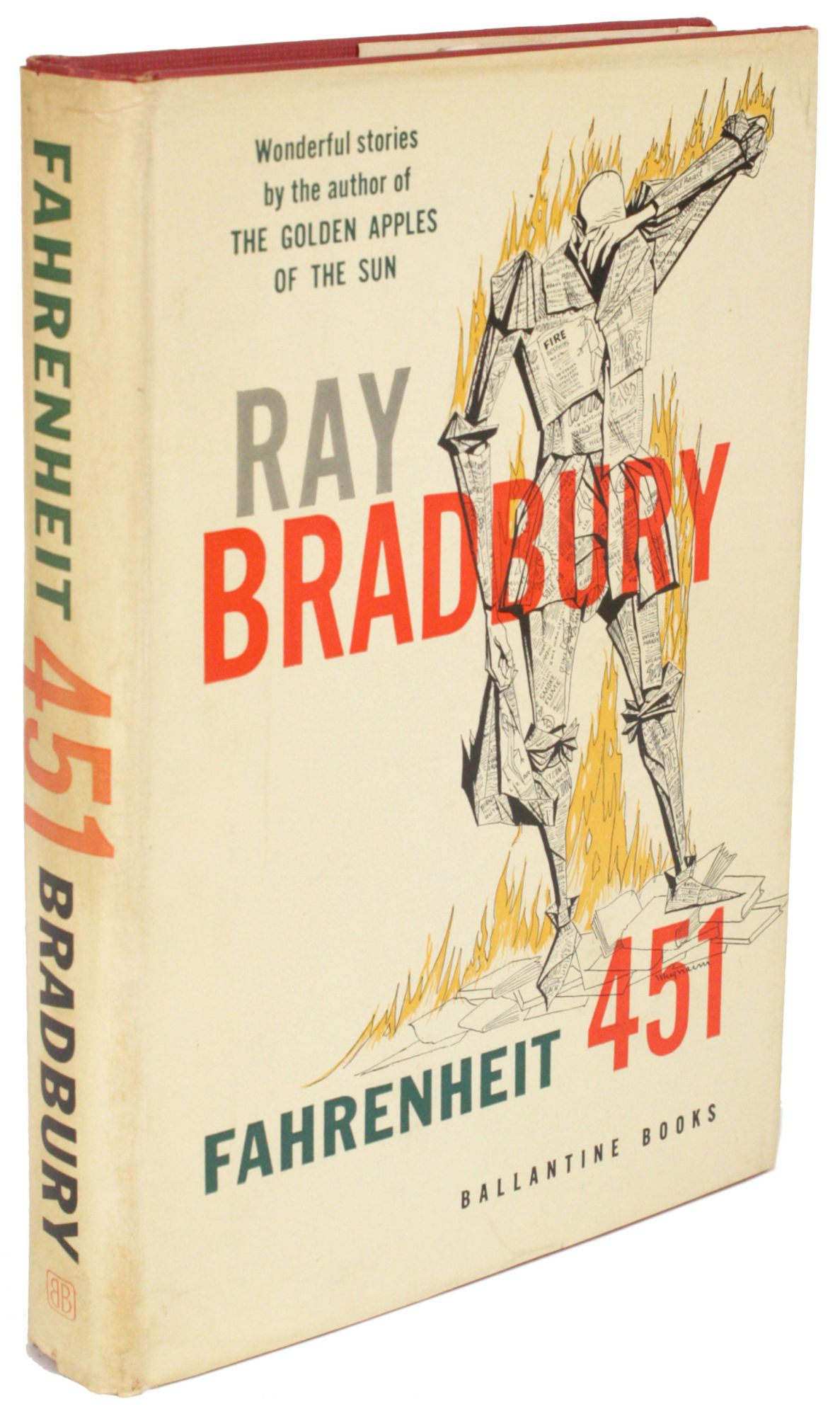
Ray Bradbury’s 1953 masterpiece is often reduced to a simple warning against bibliophobia and state-enforced censorship. However, framing the novel merely as an anti-book-burning crusade misses its deeper, far more sinister critique: the destruction of literature in Guy Montag’s world was not initiated by a tyrannical government fearing books, but by a populace that surrendered critical thought in exchange for convenience, instant gratification and artificial peace.
While classic anti-censorship narratives depict oppressive regimes seizing power by burning libraries, Bradbury flips the axis of responsibility. Through Captain Beatty, the novel delivers its crucial revelation: government censorship was merely the final step in a cultural shift voluntarily chosen by the public. As Beatty himself explains:
‘It didn’t come from the top down … There was no dictum, no declaration, no censorship, to start with, no! Technology, mass exploitation, and minority pressure carried the trick, thank God.’
The destruction of literature was driven by three interconnected cultural forces rather than a simple fear of print:
• The Demand for Speed and Simplification: As modern life accelerated, complex narratives were condensed into summaries, digests and soundbites. Society traded the deep, often uncomfortable engagement required by literature for low-effort and immediate entertainment.
• The Pursuit of Passive Tranquility: Literature naturally provokes, questions and disturbs. In the book’s dystopian society, feeling uncomfortable or intellectually challenged became taboo.
• Anti-Intellectual Egalitarianism: Bradbury highlights a perversion of equality where literacy and deep thought are seen as threats. To ensure everyone is born free and remains equal, society enforced a race to the bottom, stripping away anything that made one person more thoughtful than another.
Ultimately, Fahrenheit 451 is less about a fear of physical books and more about a fear of what books represent: friction, reflection, nuance and individuality. The physical incineration of literature by the firemen was merely the natural endpoint of a society that had already burnt its own attention span, intellectual curiosity and capacity for empathy.
We must remain constantly vigilant against prioritising painless comfort over challenging truths, lest we quietly build the very matches that burn our own intellectual freedom.