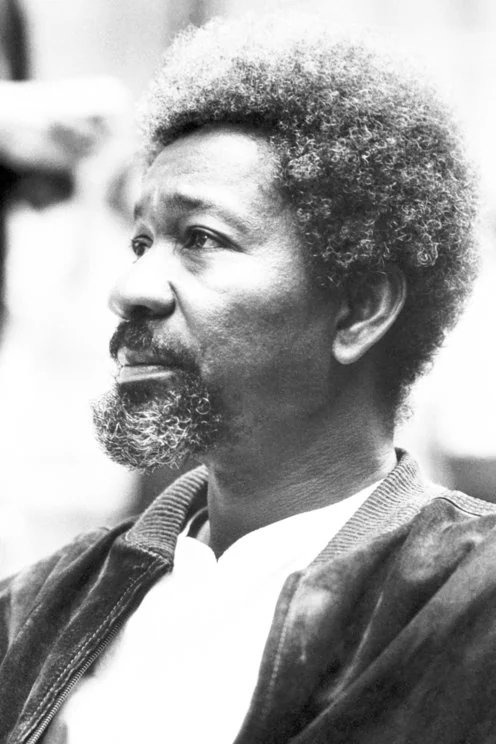
Of course I’ve heard of Wole Soyinka, the Nigerian playwright and poet who won the Nobel Prize in Literature in 1986. What I’ve just recently discovered is his poem Telephone Conversation, written and published for the first time sixty-three years ago.
Notably, Wole Soyinka did not include this poem in his 1967 own debut solo poetry collection, Idanre & Other Poems. The Telephone Conversation was first published in the anthology Modern Poetry from Africa, edited by Gerald Moore and Ulli Beier (Publisher: Penguin Books (part of the Penguin African Library series), Year: 1963, Pages: 111-112. [*]
Even I, as a beginner in African Literature, can see the importance and uniqueness of this ‘modern poetical geography of Africa’ as it is described in the book’s back cover blurb. Twenty-nine poets from fourteen countries and a continent in turmoil, fundamentally reshaping a relatively young political map through rapid decolonisation, nation-building and Cold War rivalry.
Back to our Nigerian poet now; I quote from the editors’ introduction:
Wole Soyinka, for instance, who studied at Ibadan before moving to Britain, is the only African poet to date who deploys a gift for light, sophisticated irony (Telephone Conversation, My Next-door Neighbour).
And the poem:
Written more than sixty years ago, Telephone Conversation remains sharp today, strikingly relevant as it sounds actual. The core mechanisms of racial prejudice, systemic bias and human absurdity that Soyinka targets have maybe evolved, but they did not disappear.
How is it relevant today?
At least in my read, with European eyes, I identify several distinct dimensions of relevance:
• The disguise of racism
In the poem, the landlady’s racism is not expressed through violent or street-level shouting. This mirrors modern covert racism, institutional microaggressions and algorithmic or coded bias, often hidden behind polite corporate language, housing rejections masked as ‘the property is no longer available’ after a name or accent is revealed or automated hiring and lending systems that discriminate based on proxy data.
• The dehumanisation by reducing a human to a metric
The landlady suddenly reduces the speaker into a single metric: skin colour. Does this not sound familiar in the mid-2020s? Rude reductionism persists in modern identity politics, tribalism and digital culture wars, where people are routinely stripped of their individuality and flattened into static demographic tick boxes or stereotypes.
• Fight against absurdity
Rather than responding with outright rage or submission, the speaker uses brilliant satire and hyperbole to expose the sheer silliness of the landlady’s racism. Today, humour, irony and meme-literacy are frequently used by marginalised groups to mock systemic ignorance without giving oppressors the satisfaction of a defensive emotional breakdown.
The poem
Telephone Conversation is not merely a historical artefact of post-colonial literature. It is a timeless masterpiece in exposing how systemic prejudice functions in everyday encounters. It reminds us that ignorance is often rigid, uninterested in actual enlightenment and deeply entrenched in mundane, routine interactions, making Soyinka’s biting wit just as urgent today.
Telephone Conversation

The price seemed reasonable, location
Indifferent. The landlady swore she lived
Off premises. Nothing remained
But self-confession. ‘Madam’ , I warned,
‘I hate a wasted journey - I am African.’
Silence. Silenced transmission of pressurized good-breeding. Voice, when it came,
Lipstick coated, long gold-rolled
Cigarette-holder pipped. Caught I was, foully.
‘HOW DARK?’ ... I had not misheard. ... ‘ARE YOU LIGHT OR VERY DARK?’ Button B. Button A. Stench
Of rancid breath of public hide-and-speak.
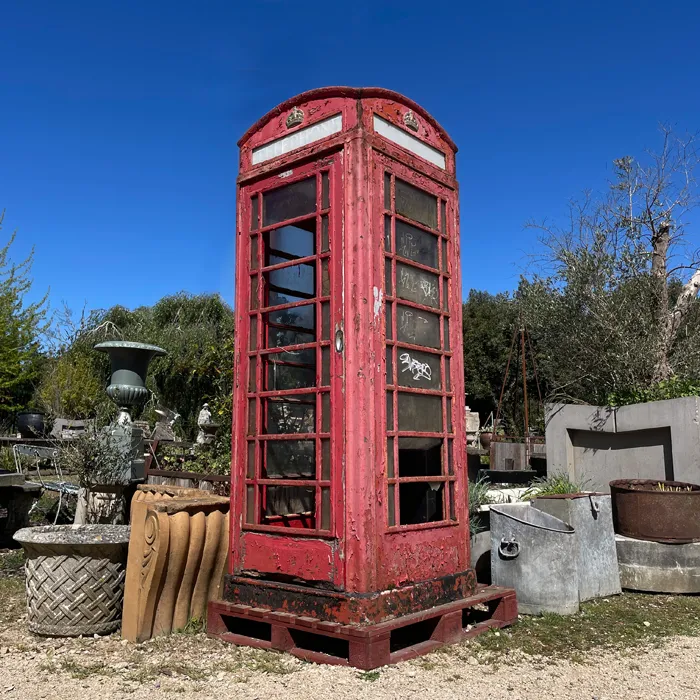
Red booth. Red pillar-box. Red double-tiered
Omnibus squelching tar.
It was real! Shamed
By ill-mannered silence, surrender
Pushed dumbfounded to beg simplification.
Considerate she was, varying the emphasis-
‘ARE YOU DARK? OR VERY LIGHT’ Revelation came
‘You mean- like plain or milk chocolate?’
Her accent was clinical, crushing in its light
Impersonality. Rapidly, wave-length adjusted
I chose. ‘West African sepia’ – and as afterthought.
‘Down in my passport.’ Silence for spectroscopic
Flight of fancy, till truthfulness changed her accent  [**]
Hard on the mouthpiece ‘WHAT'S THAT?’ conceding
‘DON'T KNOW WHAT THAT IS.’ ‘Like brunette.’
‘THAT'S DARK, ISN'T IT?’
‘Not altogether.
Facially, I am brunette, but madam you should see the rest of me. Palm of my hand, soles of my feet.
Are a peroxide blonde. Friction, caused –
Foolishly madam – by sitting down, has turned
My bottom raven black – One moment madam!’ – sensing
Her receiver rearing on the thunderclap
About my ears – ‘Madam,’ I pleaded, ‘wouldn't you rather
See for yourself?’

©1963 Wole Soyinka; poem provided at no charge for educational purposes.
Editor’s Notes:
[*] The link for the Internet Archive free access copy of the 1963 anthology: https://tinyurl.com/ModernPoetryFromAfrica
[**] In many online transcriptions of Wole Soyinka’s Telephone Conversation, including several otherwise reputable literary sites, the word ‘changed’ in the line ‘till truthfulness changed her accent’ is frequently misspelt as ‘chaged’. It is fascinating how the culture of copy-pasting perpetuates such errors without readers noticing. This small detail raises a broader question about how attentively we read the written word in the digital age.