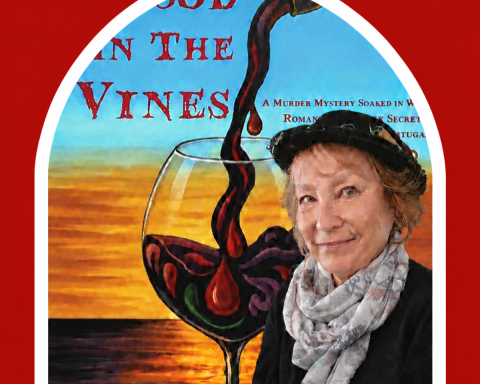
In conversation with Ana Alexandra Resende about the inspirations and creative journey behind a novel that bridges cultures, histories and mythologies
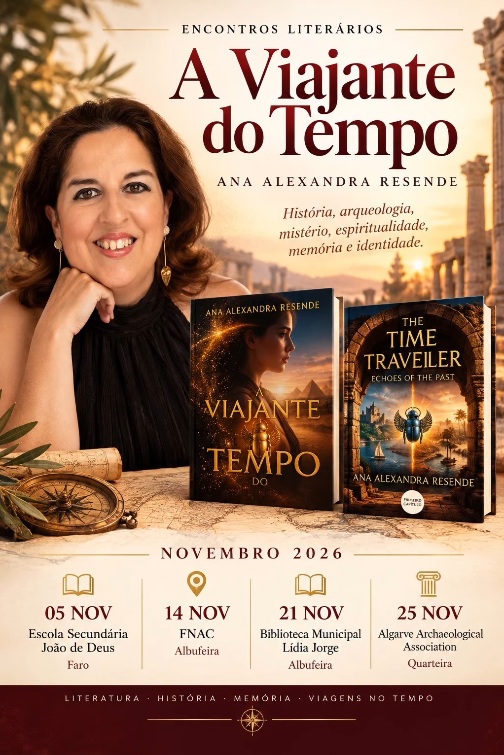
For our guest today, an archaeologist, historian, regular columnist (Postal.pt) and author, the past is not a static collection of relics, but a living narrative waiting to be understood. As the founder of Olho de Hórus Arqueologia, Ana has dedicated her career to preventive archaeology and cultural resource management, meticulously safeguarding history before it disappears under the footprint of modern development.
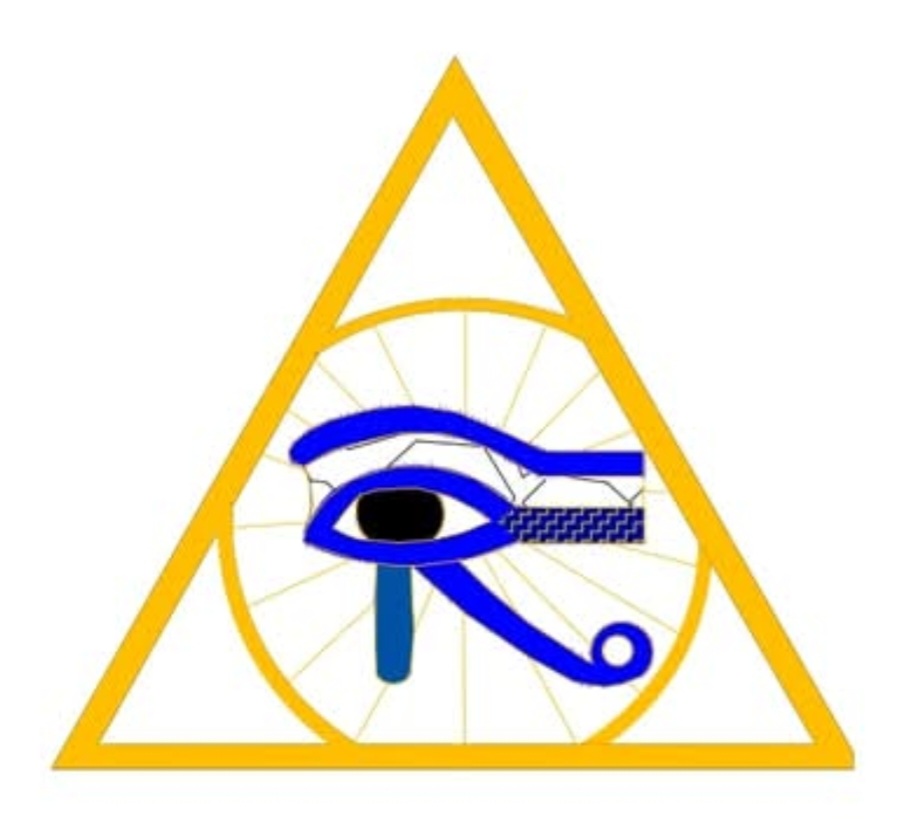
Fittingly, her company’s emblem features a stylised blue Eye of Horus enclosed within a golden triangle. In ancient Egypt, this symbol stood for protection, healing and acute perception. In many ways, it serves as the perfect visual metaphor for Ana’s work and life: a testament to her vigilant defense of cultural heritage and her deep literary fascination with ancient spiritual wisdom.
Because of this cross-continental fascination, we’ve affectionately taken the liberty of calling her Nighean Horus – or ‘Daughter of Horus’ in Scottish Gaelic. It is a bit of a linguistic cocktail, but frankly, it’s the only title that makes sense for someone whose brilliant novel, The Time Traveller, drags readers across the globe. After all, if you write such an epic historical adventure, you earn the right to have a name that requires three different cultural dictionaries just to unpack!
Thank you, Ana, for taking the time to discuss with us the challenges of a modern journey across time through research and fiction, and what it truly means to look at the world through the lens of history.
On the Language of a Historian
Question: Ana, you are Portuguese. How come you can speak and write English better than many native speakers?
Ana:
Oh, I must respectfully disagree with you!
I certainly do not believe that my English is better than that of native speakers. I still have plenty of doubts, and whenever I have one, I look for the answer. It is as simple as that.
I am naturally curious, and I have always enjoyed learning. When I write, whether in Portuguese or English, I care enormously about the words I choose. Vocabulary matters to me, particularly when I am describing a historical period, an archaeological context or a particular emotion.
I do a great deal of research before writing a book. I investigate historical settings, customs, terminology, geography and countless small details that readers might never consciously notice, but which help make a story believable.
The same applies to English. I try to be as accurate as possible, but I am perfectly aware that I still have much to learn. Perhaps being a historian and an archaeologist has taught me never to be embarrassed about not knowing something. What matters is being willing to investigate.
So, thank you for the compliment, but I must decline it! I am simply doing my best, asking questions and learning along the way. And I hope I’ll never stop.
On the Allure of the Nile
Q: For an archaeologist, is Ancient Egypt the ultimate dream land or the holy grail of archaeology?
Ana:
I suppose that depends on the archaeologist!
Ancient Egypt is undoubtedly fascinating and I have always been particularly interested in its symbolism, religious beliefs and relationship with death and eternity. But I would never say that Egypt is the ultimate goal of archaeology. That would be rather unfair to all the other civilisations that have left us extraordinary evidence of their existence.
I have spent twenty years working in the Algarve, and I can assure you that discovering a Roman mosaic, identifying an ancient structure or finding an object that someone held centuries ago can be just as exciting as standing before an Egyptian monument. What fascinates me is not necessarily the grandeur of a discovery. It is the human story behind it.
Egypt, however, has something particularly captivating: the way its people understood life, death and the possibility of existence beyond the physical world. The Ptolemaic period interests me especially because of the encounter between Egyptian and Greek traditions. I find those moments of cultural interaction absolutely fascinating.
But if you ask me whether I would love to work on an archaeological excavation in Egypt, my answer is very simple: of course I would! Who wouldn’t?
On the Weaver of Time and Space
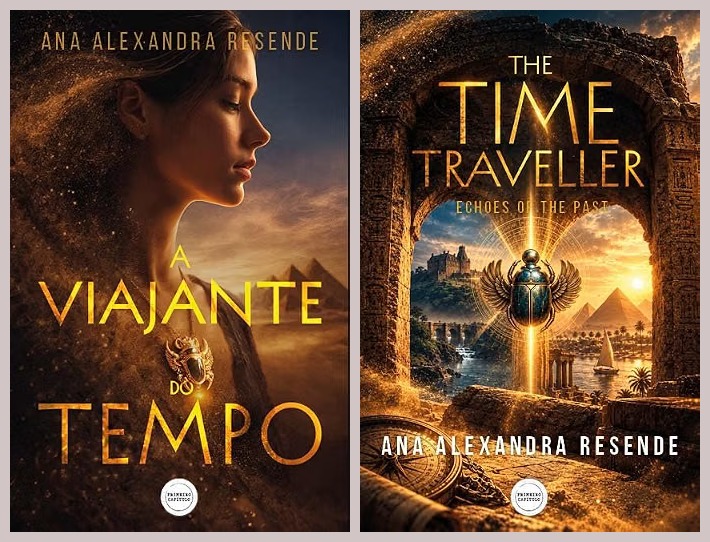
Q: In your debut novel, The Time Traveller: Echoes of the Past, Maria (an archaeologist, of course!) moves between modern Scotland, contemporary Portugal and ancient Ptolemaic Egypt. What inspired you to weave such vast temporal and geographical distances together?
Ana:
Egypt has always held a very particular place in my life. It is difficult to explain exactly why, because the connection goes beyond my academic interest in ancient civilisations. There is something deeply personal about it, something I have felt for a very long time. Perhaps some places speak to us in ways we cannot entirely explain. Egypt is one of those places for me. But I never wanted to write a novel exclusively about ancient Egypt. Nor do I intend to confine my future writing to that civilisation, fascinating though it is.
I am interested in humanity itself: the extraordinary complexity of human relationships, the choices we make, the secrets we keep and the way our experiences shape who we become.
As a historian and archaeologist, I have always been fascinated by the connections between past and present. When we uncover an ancient object, we recover a fragment of someone’s existence, but rarely the whole story. Literature gives me the freedom to imagine what might lie beyond the surviving evidence.
Portugal, Scotland and Ptolemaic Egypt allowed me to explore different dimensions of Maria’s journey. They are not simply geographical settings or historical periods. Each represents a different stage in her understanding of herself and the world around her.
And I have always been fascinated by the possibility that time may not be quite as straightforward as we imagine. I love mysteries, unanswered questions and stories that challenge our perception of reality.
Ultimately, however, The Time Traveller is not simply about travelling through centuries or across continents. It is about identity, memory, love, betrayal and, above all, the courage to reclaim one’s freedom. Egypt may have been one of the most personal starting points for this journey, but it is certainly not where my imagination intends to stop.
On the Blurred Lines of Reality
Q: You have spent two full decades working with the archaeological heritage of the Portuguese Algarve. How much of your own professional experience and archaeological fieldwork found its way into your protagonist’s daily life?
Ana:
More than I probably intended!
Maria is not me. And yet, in many ways, she is. I believe that I am present in every woman I write about. Not necessarily in their circumstances, their decisions or even their personalities, but in something deeper. I give them fragments of my thoughts, my emotions, my fears, my contradictions and, sometimes, my own unanswered questions.
Perhaps that is inevitable when you write with such personal involvement.
As for archaeology, twenty years of professional experience have certainly left their mark on Maria’s world. I know the excitement of uncovering something that has remained hidden for centuries, the patience required to interpret archaeological evidence and the responsibility that comes with investigating the lives of people who can no longer speak for themselves.
But I also know the less romantic side of the profession: the physical exhaustion, the endless documentation, the administrative difficulties and the frustration of trying to reconcile scientific rigour with the practical realities of archaeological work.
I wanted those details to feel authentic.
And yet, Maria is much more than an archaeologist. She is a woman trying to understand herself, confronting difficult truths and gradually finding the courage to make her own choices.
That is where the boundaries between author and character become rather blurred.
I do not necessarily write about my own life, but I inevitably write from it. From what I have experienced, observed, questioned, feared and hoped for.
I think every character carries something of the person who created them, even when their lives are entirely different.
So, yes, Maria has inherited a great deal of my professional experience. But she has also inherited something much more intimate: a part of the woman behind the archaeologist.
And perhaps that is the most revealing thing I can say about her. Maria is not my autobiography. But she is certainly part of me.
On a Landscape Visited in Dreams
Q: I was lucky enough to read your book a few weeks after the launch and I’ve compared your evocative descriptions of Scotland to Bram Stoker writing about Transylvania without having visited the land. How did you manage to capture the atmosphere of Stirling so vividly before ever setting foot there?
Ana:
First of all, comparing me to Bram Stoker is extraordinarily generous. I am not sure I deserve such a comparison, but I certainly appreciate it!
The answer is research. A great deal of research. I am probably incapable of writing about a historical place without first investigating it thoroughly. Before describing a location, I want to understand its geography, its history, its architecture and, whenever possible, the way people experienced it at different moments in time.
I pay particular attention to historical accuracy and vocabulary. If I am describing a building, a landscape, an object or a particular custom, I want to use the appropriate terminology. I often find myself investigating details that may eventually occupy no more than a sentence in the finished book.
But I believe those details matter.
Of course, research alone does not create atmosphere. At some point, imagination must take over. I try to visualise the places I write about, to imagine the sounds, the light, the weather and the sensations they might provoke. My archaeological training probably helps enormously with this. Archaeologists are constantly trying to reconstruct environments and understand places from fragments of evidence.
Writing fiction allows me to take that reconstruction a little further.
And Scotland has always fascinated me. Its history, its landscapes and its extraordinary atmosphere provided wonderful material for my imagination. I wanted Stirling to feel like a real place, not merely a backdrop for the story.
Whether I succeeded is for readers to decide.
But I am delighted that you felt you could almost be there. For a writer, that is a wonderful compliment. But then again, considering the themes explored in The Time Traveller, perhaps there is another explanation altogether.
Who knows? Perhaps I have walked through the streets of Stirling before, in another lifetime.
I certainly cannot prove it. But wouldn’t it be a wonderful explanation?
And perhaps that is precisely why I love writing fiction: it allows us to explore possibilities that history cannot confirm, but imagination refuses to dismiss.
Editor’s Notes:
Both editions of Ana Alexandra Resende’s book The Time Traveller: Echoes of the Past and A Viajante do Tempo are available worldwide. We suggest: Amazon.co.uk (£3.37 for Kindle) and Atlanticbookshop.pt (€16.00 for paperback).
– – – – –
Ana Alexandra Resende’s online presence:
https://www.instagram.com/anaalexandraresendeautora/
https://www.facebook.com/p/Ana-Alexandra-Luz-Resende-61550048482599/