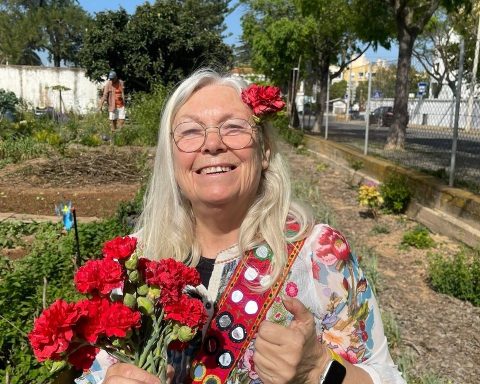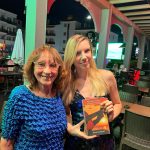
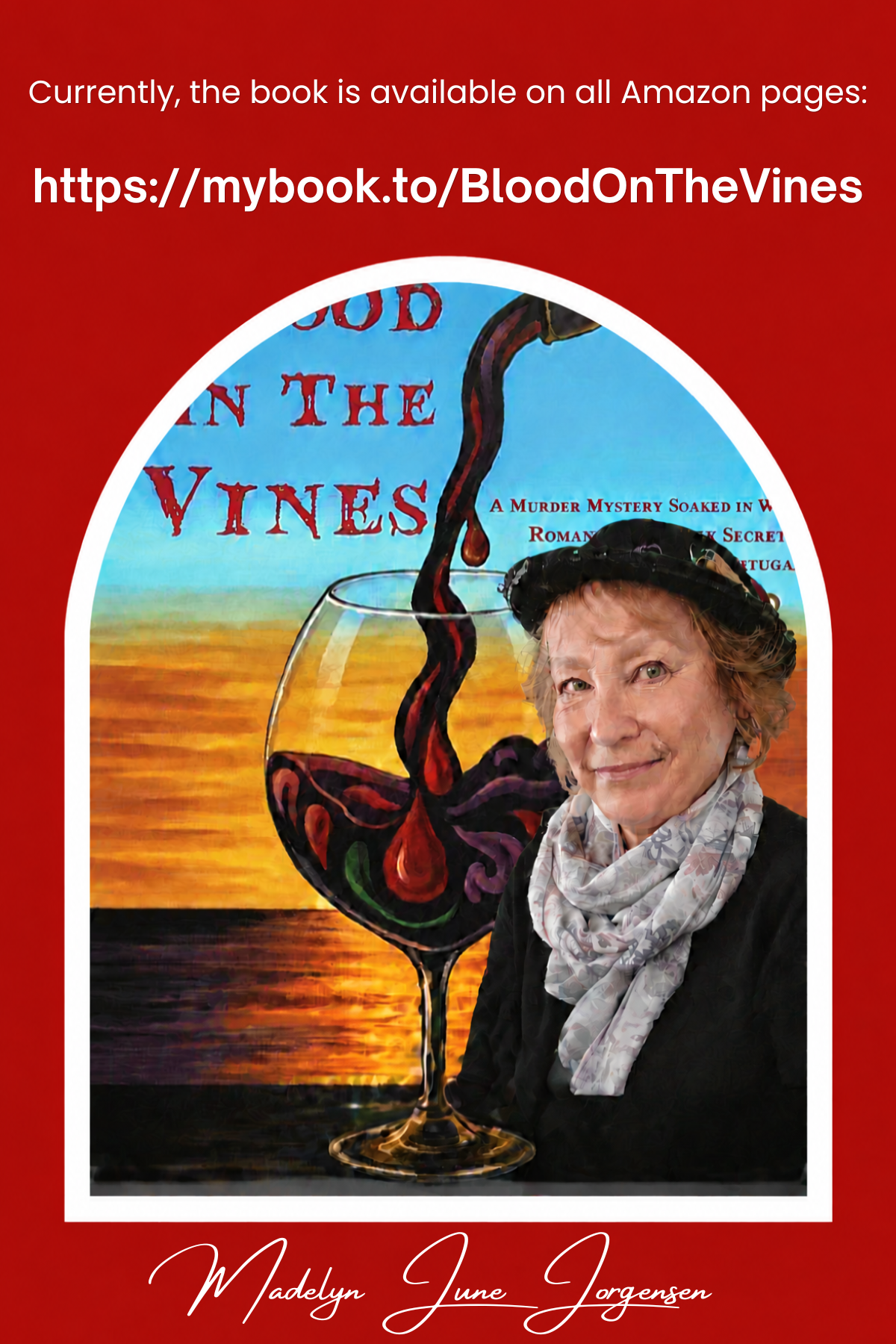
Only a few people turn a dream of daily beach walks in paradise into their reality, but author and artist Madelyn June Jorgensen did just that. June, thank you for making time to chat with us today before heading out to your shore!
On Artistic Identity and Inseparability
Question: You’ve already written memoirs, fiction, poetry, plays, and blogs, as well as created contemporary Indigenous visual art. Do you think of yourself primarily as a writer, an artist, or do the two identities feel inseparable?
June
I consider myself primarily a writer, but I sometimes use my art as illustrations in my books. I mainly paint to relax and have a break from the stress of daily life, or to take a day off from writing, often on a Sunday.
On the Influence of Global Living
Q: Your books often focus on travel, family, identity, and experiences from different places and cultures. How has living between Canada, Portugal, and Switzerland shaped the stories you tell?
June
That’s a very good question. Living in these three countries has shaped my stories a great deal. There is a part of me in virtually all the stories I write, whether they’re consciously chosen or tidbits of my personality, life experiences, circumstances or dreams. Adventurous and curious about life, I often seek unusual living situations and experiences throughout my adult life. I thrived living in different countries, and through these experiences, good or bad, they shaped my character.
As a child in Canada, I was shy and somewhat withdrawn. I was raised a Christian in a conservative but loving environment, after beginning my life as an orphan and being adopted. My personality was shaped by this, and I wrote in journals to understand my sometimes turbulent childhood.
Moving to Switzerland at age twenty-two, married, with a young son, helped open my eyes to the world. I became more confident; it broadened my perspective on life, making me more accepting of languages, diverse living situations, cultures, and people in general. I made many memories while living there. My memoir books tell the story. When I returned to Canada, education, family, and unforeseen tragedies shaped my life. I applied these experiences to my writing. I realised over the years I can sometimes express myself more profoundly through words than verbally.
Retiring to Portugal fulfilled my dream of living in a warmer climate in the winter and walking on the beach daily. It was, and is, living in paradise. It was, and is, living in paradise. The easy-going lifestyle helped me to relax and let go of stress. I was able to write more easily and proficiently. I never lacked for story ideas.
I still enjoy spending time in Canada and Switzerland, and I’m close enough to this tiny, spectacular country in the heart of Europe that I can visit my son and grandson regularly.
On the Revelations of Memoirs
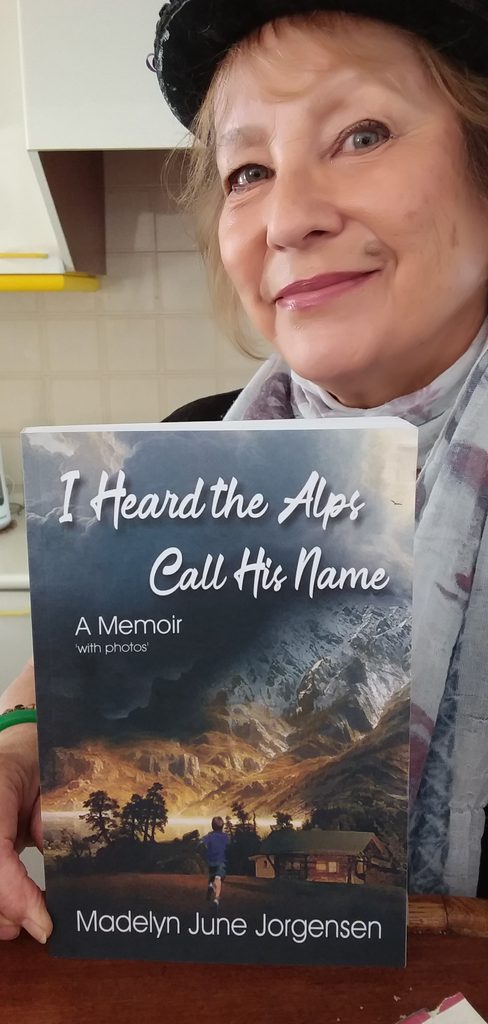
Q: Your first memoir, I Heard the Alps Call His Name, was deeply personal. What did you discover about yourself through the process of finally putting that story onto the page?
June
When I decided to write a book after I retired, I looked at a half-finished draft I had written years earlier about a part of my life that was life-changing. It spanned eleven years when I was in my thirties, when my ex-husband illegally took our nine-year-old son from Canada to Switzerland. It dealt with the aftermath, emotional pain, betrayal, alienation, and years of turmoil. I decided to finish this memoir and hopefully find some closure.
When I first began writing this book, it brought back many painful memories I had buried over the years. I struggled to finish it, stopping many times – almost abandoning it. But something inside told me it needed to be written – to tell my story, for myself, and for my son. Two years later, I finished the book, and I was very happy I struggled through it.
I began to understand that life deals us unfair situations that can either break us or make us a better person. It made me a better person. I also knew I was a survivor and could handle tough situations and not buckle under pressure. I also learned that I never wanted to give up and always searched for the light at the end of the tunnel. It was not easy, and I needed to forgive myself. But a bigger obstacle was forgiving my former husband; I eventually did, and we began a different relationship – a cordial friendship grounded in respect. My ex-husband also read the book and admired me for writing it, saying he wished he had dared to write it himself.
It also brought my son and me to a different level in our relationship. After reading the book, my son, for the first time, realised what I had gone through and developed empathy and respect for me. We still had painful arguments, but eventually worked through our problems. He is now my best friend.
Writing the book definitely brought closure to this part of my life, and to my son’s.
I also discovered that one can’t change the past. And it’s important to live in the present and follow your dreams. I also don’t allow the little things in life to get me down.
On Murder Mystery
Q: You’ve now moved into crime fiction with Blood on the Vines, a mystery set in Portugal. What inspired you to leap from memoir and personal history into a murder mystery?
June
I’ve always enjoyed writing fiction, especially short stories. I wrote for different magazines and newspapers over the years, both fiction and non-fiction.
After I wrote my two memoirs, it was a natural step to write fiction. I always wanted to write a novel. As I love murder mysteries, I wrote my first novel loosely based on the books by Agatha Christie, an author whom I admired.
Writing a novel was difficult, but I relished using my creativity, imagination and life experiences to the fullest. I like a good challenge. I find it improves my overall writing style and helps me to think outside the box. Other murder mystery stories are being planned, but they will probably be formatted into short stories or a novella.
On the ‘Junebug’ Identity
Q: On your creative platform (Junebug Writerartist), you merge your artistic identity under one umbrella. What does the name ‘Junebug’ signify to you personally and professionally?
June
Junebug is a nickname that I was given as a child. I was born in June, hence my name, and it stuck throughout my life. I only started to use it in my artistic identity recently. On my social sites and personally, I was often called by my nickname, so I decided to incorporate it into my professional life.
I have a colourful tattoo of a junebug on my left forearm.
– – – – –
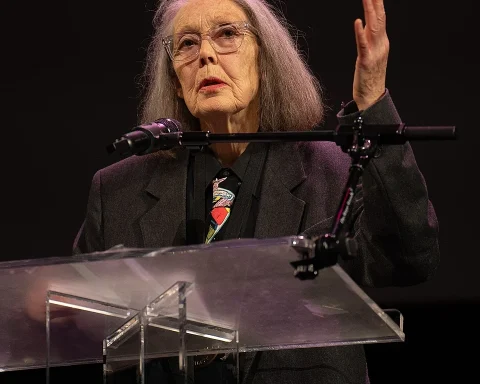
[While I was preparing the five-question mini-interview, two unexpected events occurred: last month, European Commission President Ursula von der Leyen suggested making Canada the EU’s first-ever associate member, and just a few days ago, Canadian-Icelandic author, poet and professor of classics Anne Carson was awarded the Nobel Prize in Literature. That was when the idea struck me: why not ask a Canadian directly for her take on these two remarkable events?]
Extra Question: As someone who navigates Canadian identity from the outside, how do you read this convergence? Does Carson’s win feel like an expression of a uniquely Canadian borderlessness, or does it point to a shift in how Canadian literature locates itself on the global and European stage?
June
I would read this convergence less as proof of a uniquely Canadian borderlessness than as a moment when the idea of a borderless identity becomes clearly legible — culturally, politically, and institutionally.
The timing is striking. On 8 October 2026, Anne Carson was awarded the Nobel Prize in Literature, recognised for work that enters into a playful dialogue with classical tradition to create new forms for contemporary literature. Meanwhile, the European Union’s invitation to Canada to explore a new form of “associate membership” has opened a different question: how closely can a country belong to a cultural and political project without becoming territorially or institutionally identical to it? The proposed EU status remains undefined, so the parallel is suggestive rather than evidence of a direct connection.
For a long time, one recurring question facing Canadian literature has been how to establish its distinctiveness without being defined entirely in relation to larger literary centres, especially the United States and Britain.
Anne Carson does not address this question. Her achievement doesn’t depend on making Canada the exclusive subject of her writing. She draws on classical Greek literature, works through modern European and North American traditions, and continually unsettles the boundaries between literary genres. Yet her Canadian origins remain part of her literary biography and writing.
In that sense, the Nobel recognition might be read not as the admission of Canadian literature into a European canon, but as a reminder that the canon itself is continually being remade by writers who refuse to respect its conventional boundaries.
The contrast between Literature and Politics matters. Literature can sustain ambiguity and contradiction without resolving them. Political arrangements will eventually have to specify rights, responsibilities and authority.
Europe has always been present in Canadian literary life, alongside Indigenous intellectual and artistic traditions, Francophone histories, British literary inheritances, American cultural influence, and connections across the wider world. Anne Carson’s classical references are not evidence that Canadian literature is becoming European. They show how a writer working from a Canadian background can take up a tradition that predates modern national borders and make it newly consequential.
The literary and political situations therefore illuminate one another without being identical.
Carson need not represent Canada in every poem. But her recognition can enlarge the international space available to Canadian writing — including work that is difficult to classify as national literature in the first place.
Anne Carson’s literary answer is to translate, rearrange, interrupt and invent. Canada’s political answer will have to be negotiated.
June’s online presence: https://junebugwriter.com/
June’s books so far: https://amoz.onl/7us
The roots of June’s literary path: https://mybook.to/HeardTheAlps