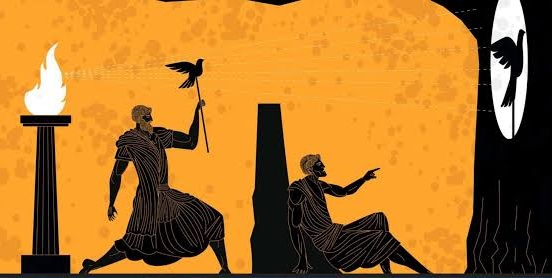
In a vast, modern city, millions of citizens lived inside a windowless tower block. They spent their entire lives facing individual, glowing algorithm screens, echoing the trapped prisoners inside Plato’s twenty-four-century-old cave.
Behind the citizens, in dark salons, sat the puppet masters, including media conglomerates, policymakers and tech executives. These groups fed data into massive servers, casting tailored streams of outrage, curated news, and hyper-partisan commentary directly onto the screens. Because the citizens had never looked away, they believed the digital streams were the absolute truth. They divided themselves into factions based on the colours of the graphics on their screens, fiercely hating the citizens whose screens flashed a different colour.
One day, a citizen’s device malfunctioned and powered down. Forced to look away from the glow, she discovered the hidden servers and the cables running to her seat. She found a heavy exit door, pushed it open and stepped out of the block.
Outside, the bright light of objective reality blinded her. As her eyes adjusted, she saw the real world. She witnessed complex social issues that could not be summarised in a ten-second video. She saw neighbours from rival screen factions working together peacefully in community gardens. She realised that nuance, compromise and shared humanity existed far beyond the digital divide.
Eager to help, she returned to the tower block. She ran down the dark corridors, shouting to the citizens that the screen feeds were engineered illusions designed to keep them angry and divided.
However, the citizens refused to look up. They mocked her, calling her a traitor and a purveyor of fake news. The screen feeds quickly updated, labelling her a dangerous radical. Fearing the loss of their comfortable certainty, the citizens banded together to silence her, turning back to their screens to consume the next comforting wave of outrage.