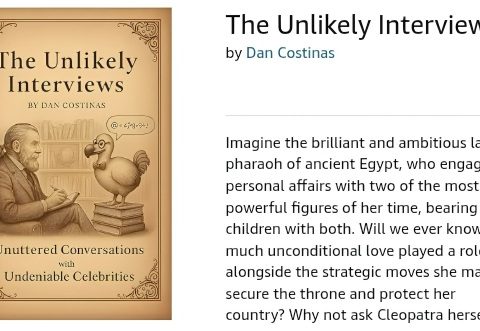

A piece of writing left unread in a desk drawer is little more than marks on paper, waiting for a spark to ignite it. Literature is not a monologue; it is a fundamental act of communication that requires both a speaker and a listener. For a writer, the audience is not merely a passive consumer or a buyer, but an active collaborator in the creative process. Without a reader to feel the text, bring personal memory to the imagery and breathe life into the characters, the author’s work remains incomplete. An author cannot truly exist in isolation, because the very concept of authorship relies on the bridge built between one human mind and another.
From the opposing angle, readers could certainly survive in a world entirely devoid of authors. Humanity would continue to eat, sleep, build, and function without novels, poetry or plays. Physical survival does not depend on storytellers. Yet, a world without authors would be an infinitely darker place. Stories provide the lens through which we process grief, celebrate joy and understand the complex inner lives of those around us. With no writers to capture the nuances of the human experience, society would lose its shared empathy, its cultural memory and its most vital source of solace.
Literature lightens the inborn loneliness of existence, reminding us that our deepest fears and highest hopes belong to us all. Without that shared flame, we are left only with the smoke of forgotten thoughts drifting into the dark.