Long before anyone on Thelba looked to the stars, the stars had been looking back. For millions of years, the planet had thrived in quiet rhythm: blue oceans, deep forests, and creatures that sang across continents. Almost all of them needed oxygen to survive. Then came the Hydrated. Soft-skinned and weak, they survived on pure imagination, learning fire, tools and writing. But as soon as they named themselves the ‘most evolved’, they built machines, split atoms and began taking more than the world could give. They called this progress.
The planet endured. For a while. It endured the forests falling. It endured the rivers becoming grey. It endured the seas filling with things that had never existed in nature and would remain there long after the Hydrated were gone. It endured the smoke. It endured the noise. It endured the endless hunger for more. More land. More money. More power. More everything.
The Hydrated knew what they were doing. That was perhaps the saddest part. They knew. But they didn’t seem to care. They measured the rising temperatures. They watched the ice disappear. They counted the species vanishing from Thelba. They placed instruments in the oceans and watched the chemistry change.
They held meetings. They signed agreements. They made promises. Then they went on doing what they had always done. Not because every one of them was cruel. Most were not. Most loved their children and they really wanted a safer future for their grandchildren. They loved the smell of rain. They loved forests, beaches and birdsong. They loved the warm light that came through a window in the morning. They simply lived inside a system that had become too large to stop.
And so the planet was destroyed by millions of ordinary decisions. A journey here. A factory there. Another forest cleared. Another war. Another year. Another promise that someone, eventually, would do something.
The end did not arrive like a thunderbolt. It arrived gradually. That was its great cruelty. By the time the Hydrated understood that Thelba was dying, the planet had been dying for generations.
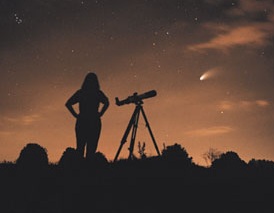
The first signal from the stars had arrived long before that. It was detected by accident. An astronomer who was studying background radiation noticed something that did not belong there. It was faint. Almost impossibly faint. A pattern hidden beneath the noise of the universe. He reported it. Others investigated it. Then more people became involved.
The signal was not random. It had structure. It had intention. It was a message. The discovery changed everything. For the first time in their history, the Hydrated possessed evidence that they were not alone. They did what Hydrated always did when faced with something they did not understand. They argued about it. They formed committees. They established institutes. They competed for funding. They published papers.
They disagreed about whether the message was a greeting, a warning, a mathematical theorem or perhaps evidence of an intelligence so advanced that the distinction between those things no longer mattered. Nobody knew. And so they studied it. For two hundred and seventeen years. Generations of astronomers devoted their lives to the message. Some died without knowing what it said. Some devoted their entire careers to a single sequence of numbers. Some believed they were close. Others insisted they were looking in the wrong direction altogether.
Meanwhile, outside their laboratories and workstations, Thelba continued to change. The summers grew hotter. The storms grew stronger. The oceans climbed the shores. The forests became smaller. The sky became less blue.
Still the work continued. Then, one afternoon, the message opened. It happened so quietly that at first nobody understood the significance. Professor Amara Venn was sitting alone in the communications laboratory when the final sequence resolved itself on her screen. She read it once. Then again. She stopped breathing.
Her assistant, Tomas, looked over.
‘What does it say?’
Amara turned towards him. There were tears in her eyes.
‘Read it.’
He did. For several seconds he said nothing. Then he laughed. Not because it was funny. Because sometimes the mind has nowhere else to put despair.
‘That’s it?’
Amara nodded.
‘That’s the message.’
Two hundred and seventeen years of mathematics. Two hundred and seventeen years of speculation. Two hundred and seventeen years of waiting to hear from another civilisation. And the universe had finally spoken. It had only said:
STOP MESSING WITH THE PLANET BEFORE IT IS TOO LATE.
Tomas looked at the atmospheric monitor, then at the clock. The planetary grid had already begun its final cascade failure; the air processors had two hours of power left before the oxygen levels plummeted permanently. For a moment, neither of them moved. Then they ran. The message was transmitted to every government, every observatory, every scientific institution and every surviving communications network on Thelba.
It appeared on screens across the planet.
People read it in underground shelters, in government buildings, in crowded cities and in the last settlements standing beside retreating seas.
Some cried. Some prayed. Some laughed. Some denied it. Some asked who had sent it. Others asked why.
But there was no time left for answers. Two hours were not enough to repair an atmosphere. Not enough to restore a forest. Not enough to clean an ocean, reverse a war or make a species reconsider the meaning of the word enough.
Two hours were barely enough to understand that the warning had come too late. Amara returned to the observatory. Outside, the horizon was red. The sun looked like a small golden coin through the dust. For the first time in her life, she looked at the world without thinking of it as something permanent. She thought of the oceans. She thought of the forests. She thought of all the creatures that had lived and died without ever knowing the Hydrated were destroying the only home they had. She thought of the children. All of them. The birds that would not hatch. The whales that would not return. The seeds lying beneath the poisoned soil, waiting for a spring that would never come. The world had never belonged to the Hydrated. They had simply been lucky enough to borrow it. And they had mistaken borrowing for ownership.
At 16:07, Amara made one final decision. She copied the message. Then she sent it back into space. Not to the civilisation that had sent it. To everyone. Every direction. Every star. Every world that might one day be listening. She added nothing of her own.
There was nothing left to say.
At 16:19, the last major communications network failed.
At 16:31, the oceans reached cities that had once stood far from the coast.
At 16:43, the sky darkened.
At 16:51, the last transmission from Thelba disappeared into static.
Then there was silence. The planet continued turning. For a very long time.
Without Hydrated, the ruins slowly disappeared beneath vegetation. The seas settled. The atmosphere began, over the course of ages, to heal. The planet remembered how to live.
It always had.
Long after Thelba had fallen silent, the message continued travelling. It passed through darkness. It crossed distances no ‘evolved’ mind had ever truly understood.
Eventually, it reached another world. There, an astronomer noticed something unusual in the background noise. She called her colleagues. They studied the signal. They decoded the first sequence. Then the second. The room filled with excitement. For the first time in their history, they understood that they were not alone. They had received a message from the universe.
They gathered around the screen. The words appeared:
STOP MESSING WITH THE PLANET BEFORE IT IS TOO LATE.
For a long time, nobody spoke. Then one of the astronomers looked through the window. Outside, beneath the light of a pale morning sun, the world was green. The oceans glittered. Birds moved between the trees. Everything was alive.
The astronomer smiled. For the first time, a civilisation received the message early enough to understand that it was not a prophecy.
It was a chance.