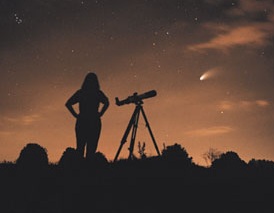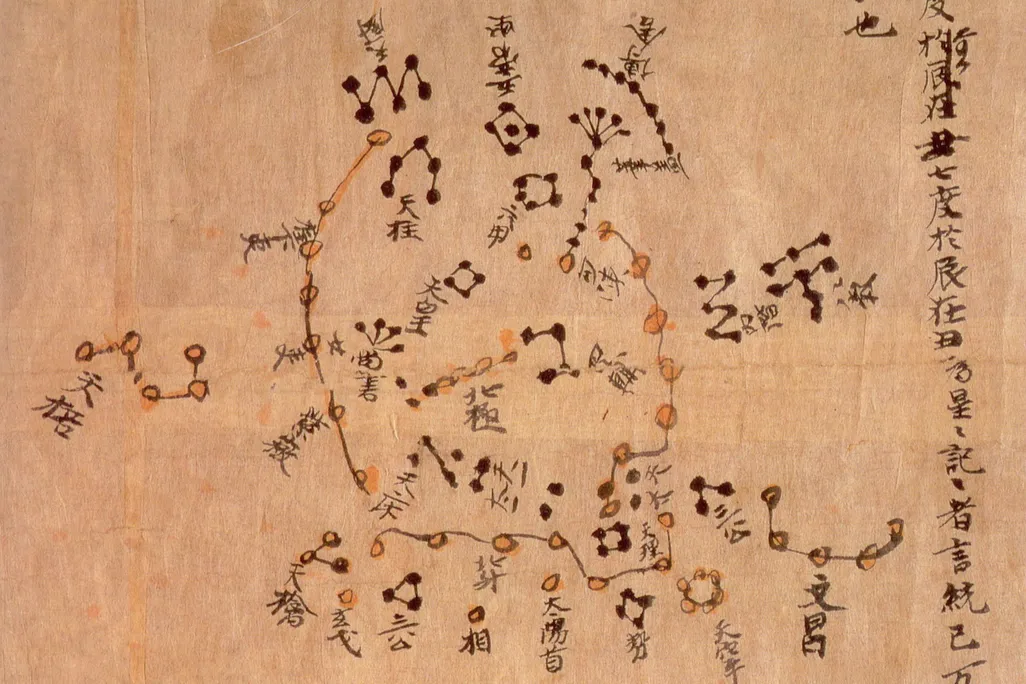
The stars are far more than distant points of light. For thousands of years, people have looked at them to try to better understand our world. Before modern technology, the night sky provided an important guide for travellers, farmers and sailors. By observing the movement of stars and planets, people could measure time, which was fundamental for agriculture, religious rituals and navigation across what seemed to be endless oceans.
Stargazing provided early insights into terrestrial dynamics. Tracking celestial motion established that the Earth rotates on its axis, whereas seasonal variations in star patterns demonstrated its revolution around the Sun. Collectively, these historical astronomical observations clarified our planet’s location within the broader universe.
In the past, explorers relied on the stars to travel beyond familiar lands. Sailors used constellations to find their way across oceans when there were no maps, compasses or modern navigation systems. By studying the position of the stars, they could estimate their direction and position, allowing them to journey farther and discover new places. The night sky was therefore not only a source of wonder, but also an essential tool for exploration.
¤
Today, scientists use stars in even more advanced ways. By studying light from distant stars, they can learn about their composition, temperature and movement. This knowledge helps astronomers compare the Earth with other worlds and better understand how planets form and develop.
Even though we now have satellites, computers and advanced instruments, the stars continue to help us understand the blue planet. From ancient explorers navigating by the night sky to modern scientists studying distant worlds, from the Babylonians’ star catalogue and Thales of Miletus to this mini-essay, our search for knowledge has always been inspired by looking upwards.