By this year, the one hundred and twenty-sixth of the Third Millennium, war had become history. Children learnt about it from museum walls and antique films where men in uniforms launched drones across muddy fields. They learnt the names of dead countries, dead generals and dead cities. They learnt that humanity had once spent centuries finding ingenious ways to murder itself.
Then, somehow, we stopped the nonsense. The wars ended. The conflicts dissolved. The weapons went into archives. Peace became so ordinary that people did not notice it anymore.
And then people started eating people. The first reports were dismissed as folklore. The second were classified. By the time the authorities admitted there was a plague, half the Northern Hemisphere was already pretending not to be hungry.
That was why the Second Congress of the Boreal Cannibalism Studies Network was held beneath the old Parliament district in London. The city above had been rebuilt so many times that no one knew what century they were walking through. Glass towers leaned over Victorian ruins. Autonomous tramcars moved silently through streets that had once been choked with petrol fumes. The Thames was clean enough to drink, though nobody drank it. Rain fell every night. It had been falling for nineteen years.
I arrived at the conference centre at 02:13. The invitation had come in black encryption, printed on paper. Paper was expensive in 2126. Paper meant somebody wanted you to understand that what they were saying could not be deleted.
The envelope contained three words.
YOU HAVE BEEN EATING.
I had not. At least, I did not think I had.
The security gate beneath Westminster recognised my face, my bones and the electrical signature of my nervous system.
‘Dr Vans,’ said the machine.
‘That’s what they call me.’
‘You are late.’
‘I was told midnight.’
‘You were told midnight yesterday.’
The gate opened. I stepped directly into the Congress. There were twelve hundred delegates beneath the ruined chamber, representing forty-seven countries that technically no longer existed.
Doctors. Sociologists. Behavioural economists. Historical theologians. Forensic nutritionists. Former military psychologists. Three ministers who had resigned before arriving. And, according to the programme, seventeen cannibals attending as independent researchers.
The first thing I noticed was the smell. Not blood. Not decay. Coffee. Real coffee. The most expensive luxury on Earth.
A waiter in a silver mask carried a tray between the delegates.
‘Black?’ he asked.
‘Yes.’
He handed me a cup. I looked down. There was something pale floating in it.
‘What’s that?’
‘Protein.’
‘Plant-based?’
The waiter smiled.
‘Human.’
I looked up, but he was already gone. Across the hall, a woman in a white suit was watching me. She had silver hair and the dead eyes of someone who had spent too long looking at corpses.
‘Dr Marea Kaal,’ she said when I approached.
‘Director of the Network?’
‘Director of the part that still exists.’
‘How much of it exists?’
She glanced towards the delegates.
‘Less than you think.’
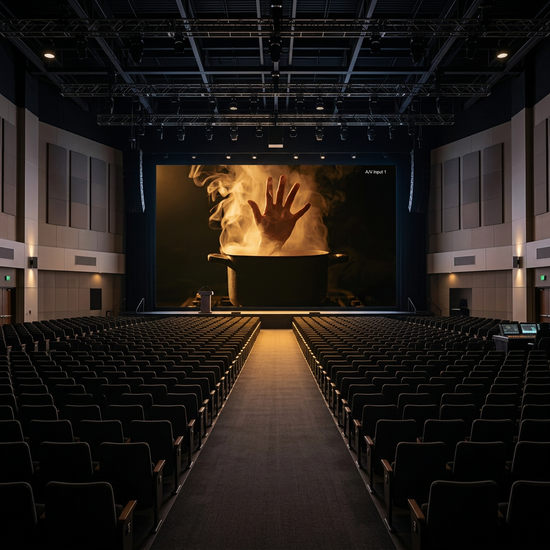
A bell sounded. The lights dimmed. On the central screen appeared a simple white sentence.
CANNIBALISM IS NOT A DISEASE.
The room went silent. A second sentence appeared.
IT IS AN ADAPTATION.
Dr Kaal looked at me.
‘You know why you’re here.’
‘No.’
‘You investigated the first outbreak.’
‘That was thirty years ago.’
‘You were twenty-six.’
‘I was an intern.’
‘You were the first person to identify the pattern.’
‘It was more of a statistical anomaly.’
‘You identified the appetite.’
The screen changed. Images appeared. A woman in Riga. A schoolboy in Reykjavík. A surgeon in Toronto. A priest in Montreal. A banker in Zurich. A great-grandmother in Manchester. All smiling. All healthy. All eventually convicted of eating human flesh.
There was no common religion. No common politics. No common age. No common genetic marker. No pathogen. No parasite. No chemical contamination. Nothing.
The only thing they had in common was that every one of them had described the experience in exactly the same words: it tasted like home.
I felt cold.
Dr Kaal leaned towards me.
‘That’s the phrase we couldn’t explain.’
‘Maybe they were copying each other.’
‘We checked.’
‘Mass hysteria.’
‘Checked.’
‘Artificial memory.’
‘Checked.’
‘Some kind of neurological infection?’
‘We checked everything.’
The screen went black. Then a voice came through the speakers.
‘Perhaps we checked the wrong species.’
Nobody moved. The voice belonged to Professor Helius Northwig. I recognised him immediately. Everyone did. Professor Northwig had been declared dead decades ago.
He walked onto the stage anyway. He looked exactly as he had in the archive photographs. Seventy years old. Thin. Pale. Perfectly calm.
A ripple moved through the chamber. Someone whispered a prayer.
Professor Northwig stood beneath the old crest of the United Kingdom and smiled.
‘Good morning.’
No one answered. He looked at me.
‘Dr Vans.’
I had not seen him since 2096.
‘You died,’ I said.
‘That was the official conclusion.’
‘Are you human?’
A few people laughed nervously. Professor Northwig did not.
‘That,’ he said, ‘is the question this Congress was designed to avoid.’
The lights flickered. Every screen in the chamber came alive. For one second, we saw the Earth from orbit. Blue. Beautiful. Peaceful.
Then the image changed. Cities. Millions of them. People walking through streets. People sitting in restaurants. People kissing. People sleeping. People eating.
The camera zoomed closer. Closer. Even closer. Until the people disappeared, what remained was a web of glowing red points – one for every person who had eaten human flesh. There were millions. Perhaps billions. The chamber became very quiet.
Professor Northwig spoke softly.
‘This plague began in 2089.’
The red points multiplied.
‘It did not spread through contact.’
More appeared.
‘It did not spread through blood.’
More.
‘It did not spread through food.’
He paused.
‘It spread through memory.’
I felt my stomach tighten. Dr Kaal turned towards me.
‘You were infected thirty years ago,’ she said.
‘I’ve never eaten anyone.’
‘No.’
Professor Northwig smiled.
‘You’ve only remembered doing it.’
The room seemed to tilt. Something moved behind my eyes. A memory. A kitchen. White tiles. Rain against the window. Someone sitting at a table. Someone I loved. A knife. My hands. I closed my eyes.
‘No.’
The memory became clearer. A voice whispered my name. Not from the past. From somewhere inside me. I opened my eyes. Every delegate was staring at me. Their faces had changed. For a moment, they looked ancient. Hungry.
Then the lights came back. The screens showed nothing but black.
Professor Northwig stepped down from the stage.
‘You misunderstand the plague,’ he said.
‘What is it?’
He stopped beside me.
‘It isn’t cannibalism.’
‘Then what is it?’
His eyes were almost kind.
‘The discovery that there was never any difference between us.’
Somewhere beneath the Congress, something began to knock. Three times. Then three more. The delegates stood. The knocking continued.
Dr Kaal whispered, ‘That’s impossible.’
‘What’s down there?’
She looked at me.
‘The first laboratory.’
‘From 2089?’
‘No.’
She swallowed.
‘From before the wars.’
The knocking became louder. Professor Northwig walked towards the sealed door at the back of the chamber. The ancient locks began opening by themselves.
One. Two. Three.
Nobody tried to stop him. Beyond the door was darkness. And from that darkness came the smell of coffee. Real coffee. Then something else. Warm. Familiar. Hungry.
Professor Northwig turned to the Congress.
‘Colleagues,’ he said, ‘we have spent thirty-seven years studying the plague.’
He smiled.
‘Tonight, we finally meet the patient.’
The door opened. The lights went out. And somewhere in the dark, humanity began to eat.