The Great Satiety
It did not arrive with a bang, but with a collective, contented sigh: books were not banned, they just became irrelevant because everyone was too perfectly happy not to care.
In the year 2126, society finally achieved the Perfect Balance. Poverty was a relic of history, and anxiety had been genetically eradicated. Luckily… or so the officials pretended from behind their septic webcams. The global network provided an endless bath of customised sensory bliss. There was no more conflict, no more yearning, and, consequently, no more need to escape.
For the readers, this was paradise. They had spent lifetimes as literary addicts, desperately consuming page after page to numb the sting of reality or hunt for a scrap of truth. But in a world where truth was guaranteed and reality was flawless, the itch simply vanished. They did not hate books; they just forgot them, the way a cured patient forgets their crutches. They spent their days in sunlit pavilions, experiencing the pure, unmediated joy of being. Sonja was one of them.
The Salon of the Infinite Mirror
Deep within the ivory tower of the old capital, the Literati still gathered. They called themselves the “Keepers of the Flame,” but the flame was entirely self-contained.
On a velvet divan sat Mariou, a man who had spent three years crafting a single, perfect paragraph about the precise shade of blue a shadow casts at 4:00 PM. He raised his crystal goblet to his peers.
‘I’ve done it,’ Mariou whispered, his eyes misting with genuine emotion. ‘I have captured the sublime. The cadence is so exquisitely tailored to my own internal rhythm that it brought me to tears three times this morning.’
‘Magnificent,’ sighed a poet who wrote exclusively in a complex, self-invented syntax that only he could decipher. He was not paying attention to Mariou; he was merely waiting for him to finish so he could recount the breathtaking architecture of his own latest stanza.
But no one seemed to really listen to what Mariou had to say, or even fake an interest; they were all absorbed by their own personas. Not a single peer bothered to honour him with even a few emojis, the way Sonja had lately. In an age when entire courtships could unfold through a handful of carefully chosen icons, her little suns, flowers, and green hearts lingered in his mind with suspicious persistence. Is that Romance? he wondered. Is this what it looks like?
After facing his own rhetorical questions, Mariou turned back to check the spelling in his new, perfect paragraph.
The Harmony of Self-Absorption
In this new utopia, the traditional writer-reader dynamic had undergone a bizarre mutation.
The Past: Writers wrote to feel heard; readers read to feel seen.
The Present: Writers wrote to see themselves; readers didn’t read anymore because they felt already whole.
It worked somehow, like a balanced ecosystem. The former book-addicts wandered the perfect beaches, entirely free from the burden of other people’s angst. Meanwhile, the literature-lovers indulged in the ultimate, unchecked romance, the romance with their own minds.
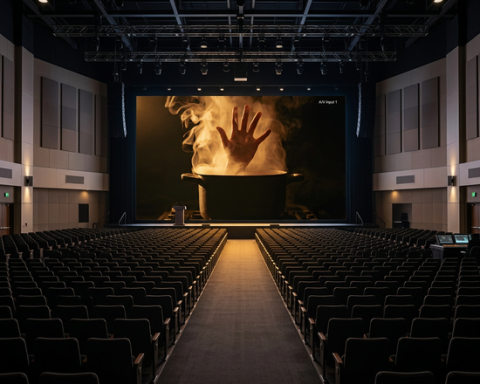
Every evening, the writers held grand readings where no one listened. A novelist would stand at the podium, pouring their soul into a microphone. At the same time, the audience of fellow writers stared intensely into the distance, composing their own reviews of their own unwritten masterpieces.
There were no bad reviews in the utopia, because there was no criticism. To criticise another’s work would mean taking the time to read it, and that was time stolen from admiring one’s own genius.
The Masterpiece
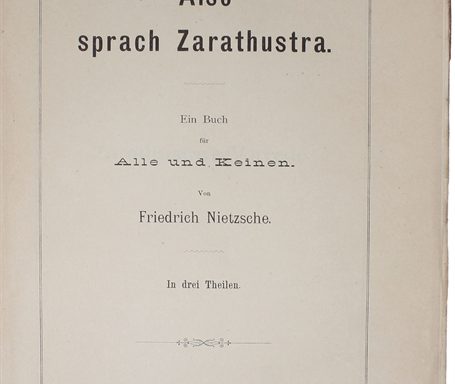
Then came the afternoon when an over-a-century-old printed book, dating back to what they call today the “Anxious Age”, was pulled from a recycling bin. A recovery tutor brought the specimen to the Writers & Readers’ Café, dropping it onto the pristine table like it was a dead rodent.
Mariou and Sonja looked at it with disgust. The book was dog-eared, stained with coffee, and filled with frantic marginalia from dozens of different hands. It was a novel about loneliness, heartbreak, and the desperate search for connection.
‘How vulgar,’ Mariou remarked, recoiling slightly. ‘Look at how it begs. It practically pleads for the reader to understand it. It has no self-respect.’
‘Disgusting,’ Sonja agreed, her eyes drifting towards the window, where she could see her own reflection in the glass. She adjusted her collar, admiring the sharp intellect shining in her own eyes.
Outside the café, a compact group of former literary addicts walked past, laughing, their minds beautifully quiet, utterly unconcerned with the ghosts trapped in ink. While inside, Mariou picked up his pen, looked into a small hand-mirror, and began to write a love letter to his Shadow, the hero who deserved it most.