
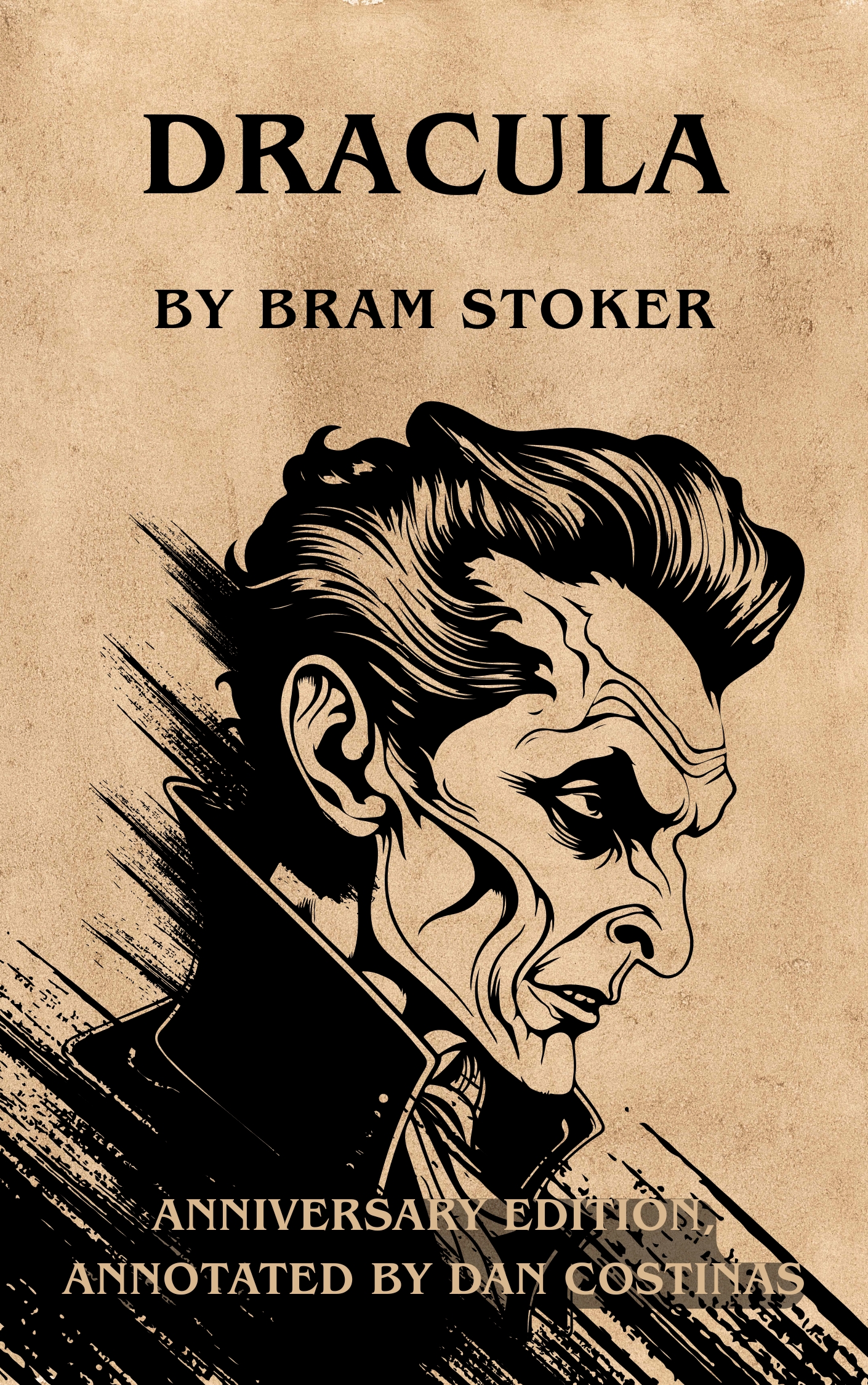
When Bram Stoker drafted his gothic masterpiece during the 1890s, the manuscript did not bear the sharp name that would echo through modern popular culture. For seven years, the book carried the working title The Un-Dead (or even The Dead Un-Dead), while its central antagonist went by the rather clunky name Count Wampyr. It was only during a summer stay in Whitby, whilst reading William Wilkinson’s Account of the Principalities of Wallachia and Moldavia, that Stoker stumbled upon the word Dracula. Believing it translated to ‘devil’ from Wallachian, he crossed out Wampyr and gave his novel its final, immortal identity.
Had Stoker stuck to The Un-Dead, the novel would almost certainly have drowned in the sea of late-Victorian penny dreadfuls. The Un-Dead sounds generic and entirely indistinguishable from competing sensation novels of 1897, such as Richard Marsh’s The Beetle, which actually outsold Stoker’s book upon initial release. A generic title sells a concept, but a proper noun sells an icon. Without a distinct character name in the title, the book might have enjoyed moderate success amongst Victorian horror enthusiasts, yet it likely would have faded into academic obscurity alongside dozens of other atmospheric vampire tales of the era.
This reveals just how providential Stoker’s discovery was. Beyond its sound, the name carried historical gravitas, tying the fictional monster to real Eastern European lore and Wallachian nobility. The name Dracula rolls off the tongue with a mix of aristocratic elegance and feral menace. It transformed a monster into a brand, allowing the character to easily migrate from the printed page to theatre marquees, cinema posters and global folklore.
On a scale from 1 to 10 for famous titles that single-handedly kept their novels above the water level, Dracula sits at a 9/10.
The title performance is extraordinary because Bram Stoker’s original prose, whilst atmospheric, was structurally uneven and met with mixed contemporary reviews. The book was not an instant, overwhelming bestseller. What kept the novel afloat until 20th-century cinema revived it was the sheer, magnetic power of its titular character. The name Dracula was so punchy that it survived copyright battles, unauthorised adaptations like Nosferatu and countless stage plays, continuously pulling readers back to Stoker’s original text. Only a tiny handful of titles, such as Frankenstein or Sherlock Holmes, match its ability to elevate a single book into a perpetual, self-sustaining myth.
Without that last-minute change in Whitby library, Count Wampyr and The Un-Dead would have stayed forever buried in the Victorian archives.
Bram Stoker’s Dracula – A Heavily Annotated Edition: mybook.to/Un-Dead


Interesting details … I didn’t know.
👌🫶