She never kept time by the church bells but measured it by the frost on her windows and the way the pine nuts shrank in their shells beneath the biting Castilian sun.
For eighty-odd years, her hands had known the exact weight of a full bucket pulled from the stone well and the stubborn green stain of wild quince juice. She lived in a whitewashed cottage south of Roda, where the geraniums spilled over the terracotta sills like red foam, her only companions a one-eyed cat named Íscar and the ghosts of a village that had slowly traded its donkeys for small white tourist Fiat 500s.
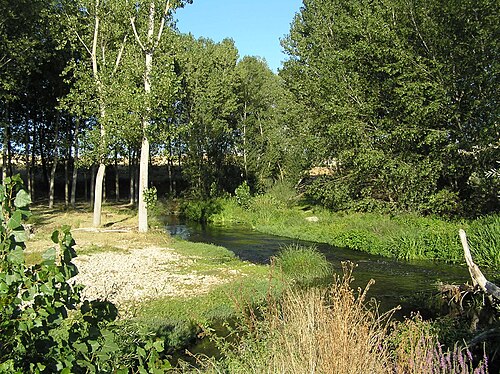
On a Wednesday in late November, when the pine forests smelled of crushed resin and damp earth, Carmelina walked down the dirt track towards the river Eresma. Her black shawl, worn thin as gauze, fluttered against the wind coming off the Guadarrama mountains. She carried nothing, neither basket nor shears.
At the edge of the reeds, where the mud gave way to the silver mirror of the slow water, a lone heron stood knee-deep in the shallows, frozen like a drop of dried wine against the grey stone. Carmelina stopped. She didn’t speak. She simply unpinned her hair, long and white and smelling of lavender water, and let the mountain wind take it.
The bird turned its curved neck, fixing her with a yellow and ancient eye.
Carmelina smiled, a slow parting of lips that tasted of the river, and stepped into the shallow water, leaving her leather shoes on the bank. The mud was cool, swallowing her ankles and pulling her softly down into the heart of the earth she had tended for a lifetime. By next morning, the cottage door stood unlatched and Íscar sat watching the empty lane from the terracotta sill.
Down by the Eresma, fishermen found a pair of worn leather shoes resting neatly on the bank, a single white feather tucked inside the left and no footprints leading out of the mud.