The myth of Atlantis has captivated humanity for millennia. First described by the Greek philosopher Plato in his dialogues Timaeus and Critias, the tale speaks of an advanced, wealthy empire that vanished beneath the ocean waves in twenty-four hours of misfortune. While many scholars view the account as an allegory about the decay of empires, explorers and historians continue to search for traces of this legendary realm.
The Minoan connection: Santorini and Crete
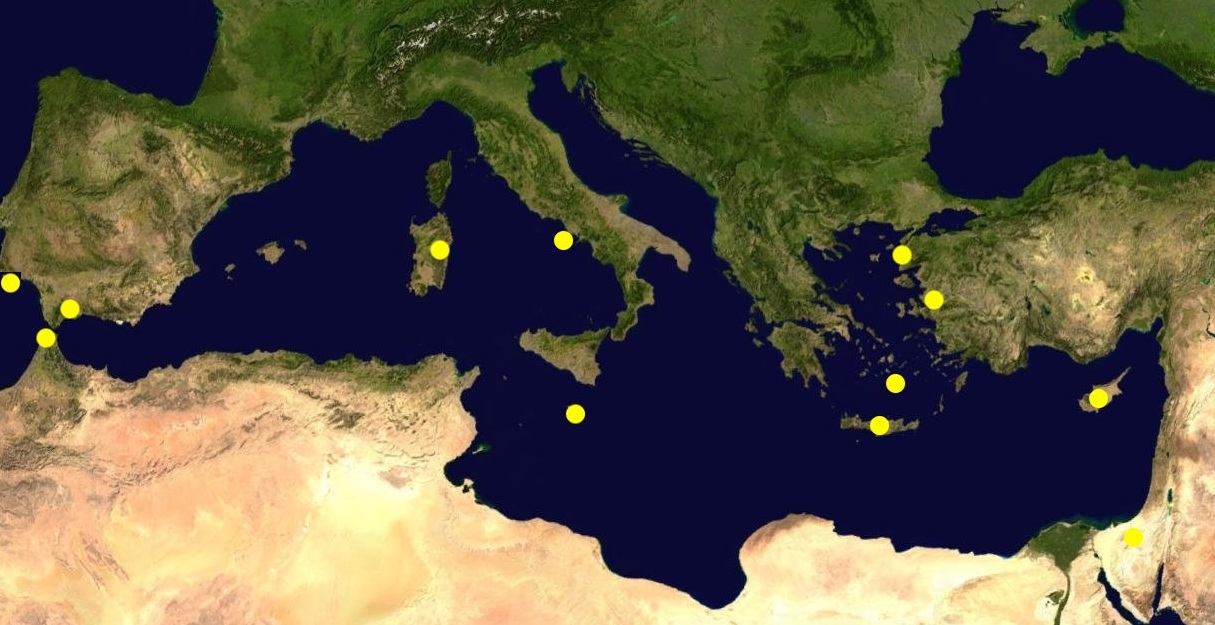
Around 1600 BCE, a massive volcanic eruption devastated the island of Thera, known today as Santorini. That natural phenomenon generated catastrophic tsunamis and dropped global temperatures, severely destabilising the Minoan culture centred on nearby Crete.
Twentieth-century excavations in Santorini have revealed a remarkably sophisticated prehistoric city featuring multi-storey buildings, drainage systems and magnificent frescoes. The sudden destruction of this advanced maritime society matches Plato’s narrative in several striking ways, making the Aegean Sea a focal point for modern researchers.
The swamps of Doñana: Tartessos in Southern Spain
Further west, beyond the Straits of Gibraltar, historically referred to as the Pillars of Heracles, lies another candidate. Researchers studying satellite imagery and sub-surface radar of the Doñana National Park in Andalusia have discovered submerged ring-like structures reminiscent of Plato’s descriptions.
This region was once home to Tartessos, a rich ancient harbour culture known for its metalwork in gold, silver and copper. This theory suggests that a powerful tsunami swept over the low-lying marshes, destroying the city and entombing its ruins beneath tonnes of mud and silt over centuries.
The Doggerland hypothesis: a sunken North Sea kingdom
Another fascinating area of study focuses on Doggerland, a vast landmass that once connected Great Britain to continental Europe. Roughly 8,000 years ago, rising sea levels following the last glacial maximum gradually submerged this fertile plain, with a devastating megatsunami triggered by the Storegga Slide accelerating its final collapse.
Although Doggerland predates classical antiquity by several thousand years, memories of lost lands submerged beneath the North Sea may have persisted in prehistoric oral traditions, eventually influencing coastal myths across Europe.
The Portuguese theory: Algarve and the Gulf of Cadiz
Just across the border from Andalusia, Portugal’s southernmost region, the Algarve, offers its own clues to the Atlantean puzzle. Sitting directly exposed to the volatile Gulf of Cadiz tectonic hotspot, the region’s coastline features several submerged prehistoric structures. Some modern researchers argue that Plato’s descriptions of a vast, marshy estuary rich in silver and wild chestnut trees point directly to this Iberian coast. Local folklore even celebrates the mythical guard of the Pillars of Heracles washing ashore in Olhão. According to legend, the gods created the unique Ria Formosa lagoon there to protect the remnants of the long-lost civilisation.
A timeless fascination
Whether Plato was recounting real historical events passed down through Egyptian records or simply inventing a moral fable, these connections demonstrate that the pursuit of Atlantis remains a testament to human curiosity. From the Mediterranean and Atlantic islands to the lost lands beneath the North Sea, the search for fallen societies continues to drive archaeological discovery across the European continent.