Setting
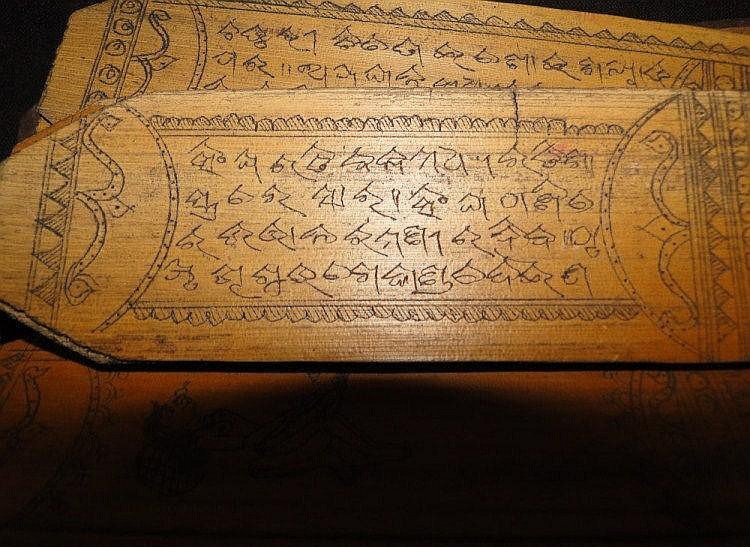
Vātsyāyana’s study room, a sanctuary of thoughts, ancient texts and sandalwood incense. Just large enough for one person to comfortably sit, sleep and store a few vital belongings. The floor is bare earth, but the philosopher and the interviewer sit on thin, woven, very coloured cotton mats. An east-facing small window lets in the cool morning air and the early light.
—-
Interviewer (humbly): Acharya Vātsyāyana, you…
Vātsyāyana (raises his left hand to stop him from talking): Listen carefully, young man; there is no need for ‘acharya’ between us; you are not my disciple and I am not your mentor. So, simply call me ‘uncle’.
Interviewer (visibly touched): Uncle, you have given me a great honour. Thank you. If I may begin, you spend your life among texts and thoughts. If a student wished to master the art of living, what, to your mind, is the most reliable source of true knowledge?
Vātsyāyana (his voice is a calm paradox: soft as a whisper, yet every word possesses the crystalline clarity of spring water): True knowledge arises not from faith alone, but from rigorous examination. There are three reliable instruments: perception, inference and testimony. For the study of the self and the world, one must begin with direct perception – observing reality as it is – and proceed to logical inference. However, for matters of timeless truths, one must rely on the testimony of our wise ancestors. To master life is to master the balance between these three indispensable means. The student who seeks only comfort treats knowledge as a commodity. He values only the fruit of the study, not the root of understanding. The dedicated student, however, views knowledge as a path to transformation; he embraces the difficulty, not for the reward it brings, but for the clarity it generates. The first is building a house on sand using borrowed tools; the other is building a house on rock using a mind made strong by sustained effort.
Interviewer (the lines on his forehead tighten briefly): This is a profound insight, Uncle. The clarity of that distinction between seeking the fruit and seeking the root is striking. It shifts my entire perspective.
Vātsyāyana (taps his knee, emphatically): Perspective? You need to be careful. A young mind is like a deer in a great forest: it can see the sweet green grass nearby and it runs straight for it, forgetting the hidden pitfall just beyond. This happens because of a failure of perspective. The mind magnifies the immediate and diminishes the distant.
Interviewer (his eyes hold a keen interest): A sobering truth, indeed. Since the mind naturally rushes towards the nearest sweet grass, how does one practically correct this fatal distortion?
Vātsyāyana (a warm smile spreads across his face): The correction is achieved through a practice our forefathers used to call anticipation of consequences. When the mind is seduced by the sweet green grass, one must pause and engage the intellect, not the instinct. Some may call it abstinence, but I do not agree; it is merely an exercise in seeing things in their true scale. By consistently focusing on the distant, large, lasting consequences, the fleeting pleasure naturally shrinks back to its true, insignificant size. The mind, once swayed by illusion, becomes bound to reality through logic and foresight.
Interviewer (a thoughtful nod): Although I do my best to understand your point of view, Uncle, I really struggle to follow it. Do you mind if we now ground our discussion in the material realities of the world, following the red thread of Kāma-sūtra? Is it really a book about ‘Intimacy for Dummies’ as it was described, only a manual for sexual positions?
Vātsyāyana (a slow, deep, amused expression reaches his eyes): That idiotic title you’ve just mentioned may be a witty simplification, but it entirely misses the spirit and scope of the book. It reveals a failure to apply that very discipline of perspective we just discussed. The Kāma-sūtra is not a manual for sensual enjoyment. If that were the case, it would be a very short work indeed. It is merely a detailed discourse on the Art of Living and the Art of Well-Being, necessary for any cultured person, and ranging from cooking and music to logic and perfume-making. Its fundamental purpose is to show how pleasure and desire can fit into a whole, civilised, and virtuous life. Sexual union is only one part of one of the sections; less than one-fifth of the book is devoted to this topic. We acknowledge wild desire’s serious threat, as its unchecked power can destroy the life one attempts to build. Thus, mastery of life necessitates prior mastery of well-being and pleasure.
Interviewer (checks his small notebook): Your work provides remarkable insights into the culture of a few ancient Indian cities; how did the social context of your time influence the writing?
Vātsyāyana (leans forward): I wrote it during a vibrant period. Social life was refined, with great attention paid to the domestic arts and civility. My Kāma-sūtra reflects the life of the cultured city-dwellers: how they conduct their lives, entertain, maintain their homes and how they engage in relationships. I recorded the different customs of different regions because I believed that love is not a single, fixed practice, but one that can be coloured by local traditions.
Interviewer (takes meticulous notes): Uncle, in your pages you often discuss women’s education, their role in courtship and even the role of courtesans. Some modern scholars have called you an early feminist. Was this your intention?
Vātsyāyana (while carefully re-stacking a pile of manuscripts): I intended to give an accurate and respectful account of human relationships. A personal association cannot be fulfilled if one party is silent or ignorant. I simply acknowledged that women are entitled to the full measure of pleasure. This is a right that is not limited to men. I also wanted to show a recognition of women’s intelligence, which is essential for mutual satisfaction.
Interviewer (nods slowly): One of the great mysteries associated with this book is its own author. It is believed that you composed it while living as a celibate religious student in Benares. Is it not a profound irony that the final word on desire was written by someone dedicated to renunciation?
Vātsyāyana (with a slight smile): Irony is a matter of perspective. As a philosopher, my goal was mastery over my senses, not ignorance of them. I engaged in deep meditation and contemplation on human nature and desire. By synthesising the teachings of my predecessors and observing society, I sought to understand the Pleasure intellectually, not physically. I distilled a vast quantity of wisdom into concise sentences and those who make the effort to carefully read and understand them might pursue pleasure with wisdom and knowledge, rather than blind impulse. To chart a territory, one need only to study the maps, not walk every path oneself.
Interviewer (grateful): Well, thanks to your kindness, Uncle, I have learned a lot from today’s discussion; it has been incredibly instructive and your clarification on the philosophical depth of your work is an invaluable testament to the wisdom contained within its pages. I very much appreciate your time. And one last question, with your permission: What advice do you have for couples reading your book today?
Vātsyāyana (waving a dismissive hand): My final counsel is simple: just tell them to always study the map, not just the destination. They must see in this book more than a few sensual pictures, but my attempt as a philosopher to chart human desire. And advise them to remember that balance is paramount (makes a gesture as if weighing two objects on scales). The obsession with Pleasure at the expense of the other Arts jeopardizes their entire life, risking bankruptcy and community exile. But yes, if they absolutely MUST focus on the one-fifth of the text that brings me so much unwanted notoriety, they should know that I advise approaching it with lightness, courtesy, and mutual respect. And for the love of the gods, tell them to read the chapter on good manners first! I don’t want another letter complaining that someone tried the ‘Wheelbarrow’ position right after having a heavy meal. Such vulgarity simply ruin the auspicious statistical curve!
—-
(Vātsyāyana closes his eyes, deliberately slowly, resuming the contemplation posture that preceded the interview, leaving the interviewer with the vast, silent weight of the book and the implied lesson of balance.)
You can read more imaginary interviews here: https://mybook.to/UnlikelyInterviews