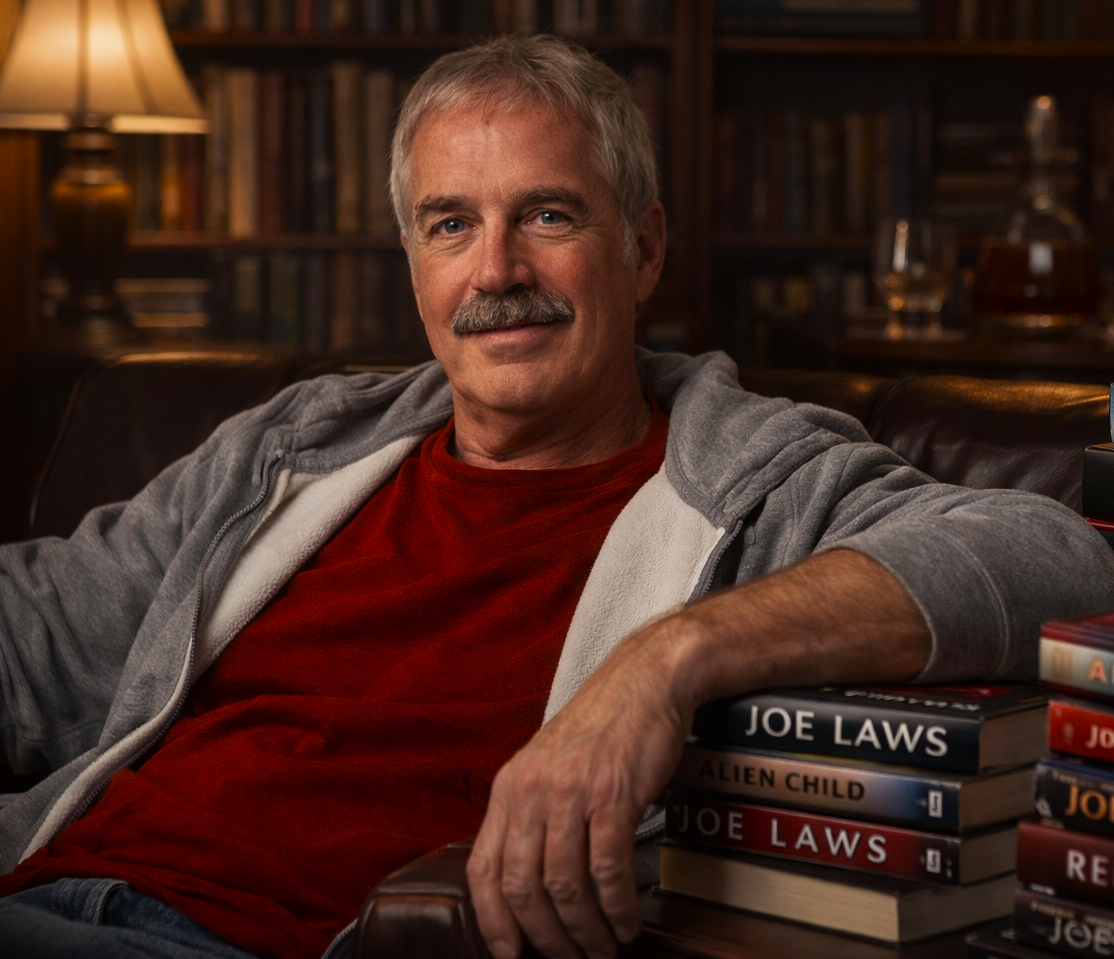
Many people dream of moving abroad in search of paradise, but your story shows us what it truly takes to build a home. Welcome, Bruce, and thank you for taking the time to sit down with me today.
On Chaos
Question: You chose to move from the USA to Spain and Portugal, two countries whose combined population is slightly less than that of California and Florida together. Don’t you miss the chaos?
Bruce:
Not a bit! We have our fair share of domestic chaos in the towns and villages where we live in Portugal and Spain: Periodic festas and ferias that disrupt the tranquility for weeks on end … Portuguese and Spanish people who take to the streets to argue and bicker in front of their neighbors … People accompanying their unleashed dogs on walks and not picking up after them… the ubiquitous frustrations of the bureaucracy in democratic states.
On Shift & Identity
Q: In your writing, you emphasize the distinction between being an ‘expat’ who plans to return and an ‘immigrant’ who isn’t looking back. At what exact moment did your mindset shift from a temporary ‘vacation bolt’ to realising Iberia was home for good?
Bruce:
For us, that moment came almost immediately upon arriving in Portugal with our D7 visas. Even before expatriating from the USA, however, we saw the handwriting on the wall and knew that we could never move back there. Unlike some “expats” – immigrants, too, no doubt – we didn’t rent a property but purchased a house which we turned into our home. We got to know our neighbors, participate in the local culture, and made a point to speak their language, not ours, no matter how wrong our vocabulary or how awful our pronunciation. If I had to identify a period of time when we realized that we were immigrants here to stay and put down roots in Portugal and Spain rather than “try them on for size” expats here for but a time and a purpose, I would say that occurred during our fourth or fifth year living in the EU. We never returned to the USA—not even to visit family and friends. We had invested financially in both Portugal and Spain not only with primary residences but rental properties. And, in parallel universes, the United States under Trump had become a wasteland of incorrigibles – crooks, thieves, authoritarians – where the country was ever more divided between the rich and the poor, the 1% v. the rest of us, those who arrogantly leaned extreme right v. those who – just as steadfastly – leaned progressively left. The Doomsday Clock was ticking under a president who didn’t give a damn for anything but his personal fortune or anyone except his egocentric self and family. Meanwhile, on this side of the great pond, we had become increasingly accustomed to the bureaucracy and political consensus achieved through coalition-building. Despite disputes and disagreements and some (expected) corruption, we came to truly believe that these two democracies cared for their people and put the people’s welfare overall over their own.
On Cultural Hurdles
Q: You’ve written somewhere that ‘paradise is never as simple as the postcards suggest’. What has been the most frustrating cultural or bureaucratic hurdle you had to overcome while settling into life in Southwestern Europe?
Bruce:
In a word, I guess that would boil down to the bureaucracy. Never getting anything right the first time around … at least, according to one government official. Go to another official working elsewhere for the same department or agency, and you’d get a different set of answers. Try to sort out your required responses and actions by email, only never to receive a reply because, in these cultures, emails go ignored more often than not. Attempt to get answers by telephone instead, and nobody picks up on the other end. Or the phone is answered by a bot who only speaks Portuguese (or Spanish) and can’t understand your answers to pre-ordained questions, so the call gets disconnected instead. Living in a “foreign” country means learning how to persevere. Have a complaint about a purchase or service from a merchant? Use Portugal’s Livro de Reclamações or consumer advocates Deco Proteste. Most importantly, get to know your neighbors; that’s how you understand their culture and the way things work (or don’t) in their country.
On Culinary Tastes
Q: A few thoughts on Portuguese vs. Spanish food and how drastically does American food culture differ by comparison?
Bruce:
How drastically? By tons! Our digestive tracts have rid themselves of so much gluten, so many preservatives, since living in Portugal and Spain. Nonetheless, since I’m neither a vegan nor a fish eater, my food choices here are rather limited. And, I must confess, I’m not particularly a fan of Portuguese food … which, to me, neither looks, smells, nor tastes appetizing. Spanish food is more to my liking. Maybe that’s because of the tapas? Sometimes, of course, I do crave a thick and juicy American hamburger, a pastrami sandwich, a Nathan’s all-beef hotdog. The fast-food franchises that pass for American food here in Portugal and Spain – Burger King, McDonald’s, Popeyes, KFC, Pizza Hut, Papa John’s, et al – aren’t really food as far as I’m concerned. They’re AI applied to machines that do the cooking. Ironically, if you go to a food court in Iberia where American fast-food franchises are side-by-side with eateries serving the country’s traditional foods, you’ll find more youngsters linked up at the kiosk machines, digitally ordering USA-style meals.
On Words of Advice
Q: To close with a bit of ‘food for thought’: for Americans looking at the current political landscape and dreaming of an escape, what is the single most important truth they need to hear before packing their bags?
Bruce:
Look before you leap.
Website: https://sites.google.com/view/bruce-h-joffe
Bruce H. Joffe’s books so far: https://amoz.onl/78x
‘My next book, Spamming and Scamming Your Book, is quite different from anything else I’ve written of late. In fact, in some ways it harkens back to my years of teaching marketing, public relations, and communications on the university level.’ – Bruce H. Joffe, author, Associate Professor of Communication (Retired):
Mary Baldwin University, George Mason University,
The American University, Carthage College,
Kaplan College.