The commissioned scene was grand, divine and entirely artificial, a glorious pretence carefully constructed for the Medici.
The brush held a droplet of natural ultramarine pigment that refused to fall. Maestro Alessandro stared at the giant linen canvas stretching across his Florence workshop, fully aware that the scene he was fabricating was a glorious, deliberate lie.
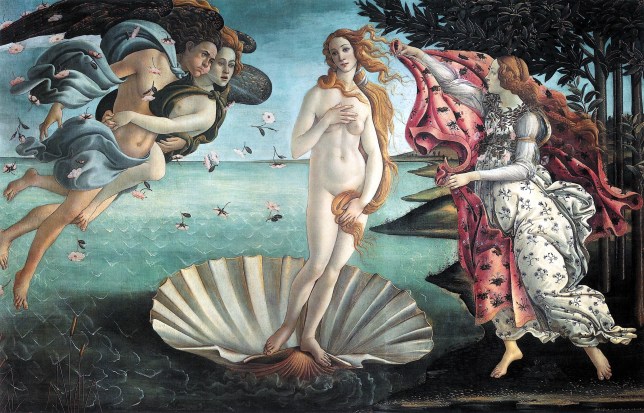
In truth, there was no grand sea foam or divine zephyr carrying a goddess ashore. There was only Simonetta, his married neighbour, shivering in her shift while two apprentices blew dried rose petals at her through brass tubes to simulate a celestial breeze.
Alessandro adjusted his grip on the mahogany handle.
‘Hold still, Simonetta,’ he murmured, matching the curve of her collarbone in tempera. ‘Posterity must believe you floated out of the ocean on a scallop shell, not that you spent three hours waiting for the egg yolk binder to dry.’
Simonetta shifted her stance, tilting her head with a practised modesty that would eventually grace the walls of art galleries for centuries.
‘Master Alessandro, when people look at this panel in five hundred years, will they see me, or will they only see a goddess?’
‘To you, I am Sandro; I have told you a hundred times,’ he replied, feathering golden highlights into her cascading hair. ‘That is the trick of the art, my dear. They will gaze upon the panel and debate Neoplatonic philosophy, mythologies of unconsumed love and the idealised female form. They will construct elaborate theories about the wind gods hovering on the left and the attendant waiting with a floral cloak on the right. They will analyse every leaf on the orange trees and every ripple in the turquoise water.’
He stepped back to examine the emerging figure. The painted woman stood upon her giant shell, luminous and untouched by the chaotic realities of fifteenth-century Italy.
‘They will never know about the damp draught coming through the studio window,’ Simonetta smiled, stepping down from her podium as Sandro laid down his finest squirrel-hair brush.
‘No,’ he chuckled, dipping his rag into linseed oil. ‘They will see only what we allow them to see. We are inventing the memory of a divinity out of pigment, wooden panels and the goddess who lives next door. For we only see what we wish to see in the art that moves us.’