Thus Spoke I
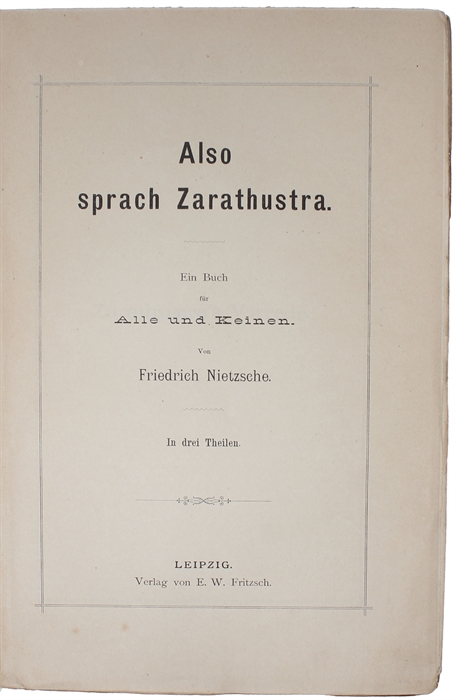
Written between 1883 and 1885, this book, subtly subtitled ‘A Book for All and None ’, is a classic work of philosophical fiction. The complex ideas are presented through poetic narrative and parable rather than standard academic prose.
Here is an accessible breakdown of what the book is about and why it matters.
The Storyline
After spending ten years in solitary meditation in a mountain cave, Zarathustra, a prophet named after the ancient Persian founder of Zoroastrianism, decides to descend to the human world to share his wisdom.
The Core Ideas Made Simple
Nietzsche introduces here four major concepts:
1. God is Dead
This simple phrase describes a cultural shift: modern society no longer relies on traditional religious beliefs or dogma for moral guidance. Therefore, humanity faces the danger of meaninglessness, known as nihilism.
2. Übermensch (The Superman)
This is a person who creates original values, embraces self-discipline and lives fully without relying on external moral codes or promises of an afterlife.
3. Will to Power
Seen as internal energy directed towards personal excellence and creative achievement. Nietzsche argues here that the fundamental drive behind human action is not mere survival or pleasure, but the desire to grow, create and master oneself.
4. Eternal Recurrence
Here we find a famous mental experiment: what if one has to relive their exact life, with all its joys and suffering, over and over again for eternity? If the answer brings joy rather than despair, then one is living a life truly worth living.
Why It Matters Today
The book remains one of the most influential works in modern philosophy. It challenges readers to step away from mindless conformity, take responsibility for their own lives and constantly strive towards personal transformation and creative self-expression.