The damp chill of Reykjavík always had a way of settling into Pedro’s bones, reminding him of everything he was not. For thirty years he had lived in an old cottage with creaking floorboards and drafty windows, yet his mind routinely retreated to a sunlit courtyard thousands of miles away.
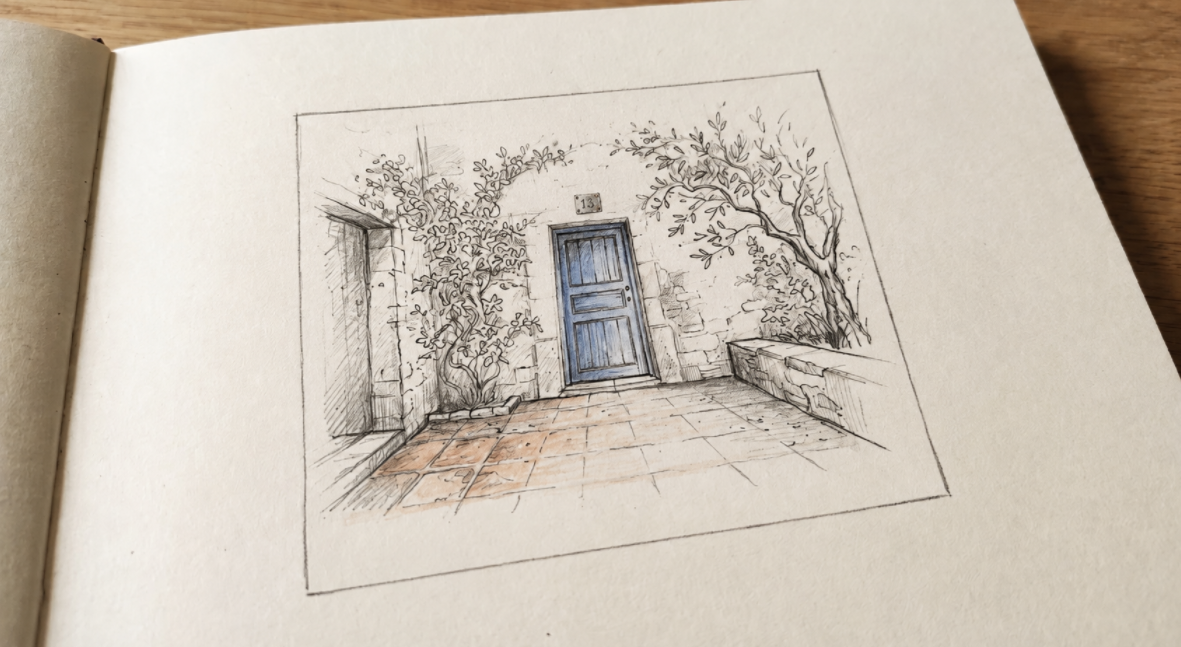
That courtyard belonged to his childhood in Andalusia. In his mind, the air there was perpetually thick with the scent of bitter orange blossoms and sun-warmed red dust. He remembered the exact shade of blue painted on his grandmother’s front door, the warm terracotta tiles beneath his bare feet and the rhythmic scraping of the cicadas in the late afternoon heat. It was a haven of absolute certainty, a place where he belonged without question.
When Pedro finally returned to Cádiz last summer, the reality struck him like a sudden frost. The house was still there, but the courtyard had been paved over to make room for a parking spot. The brilliant blue door was gone, replaced by reinforced aluminium. The orange trees had been choked out by concrete, and the once-quiet streets were now jam-packed with heavy traffic. He stood on the pavement feeling like a phantom, realising that the home he had spent three decades pining for no longer existed in the physical world.
Sitting by his window in Reykjavík with a mild cup of green tea, Pedro watched the rain streak the glass. He understood now that the home he carried was not made of stone or soil. It was an internal mosaic, built from fragments of childhood comfort, idealised memories and the quiet ache of distance. Every time he had recalled the courtyard over the years, he had unconsciously edited it, smoothing away the harsh edges and amplifying the warmth.
Time had transformed his origin into an imaginary landscape. Home was not the altered city across the sea, nor was it the drafty house in Reykjavík. It was the quiet, sacred space inside his own memory, a sanctuary that distance had allowed him to build and one that time could never tear down.
In the end, Pedro did not need the street to remain unchanged or the orange blossoms to linger in the air. The physical world was merely a vessel that cracked and dissolved, whereas the home within him remained unchangeable, tethered only to the devotion of his keeping. He took a sip of tea and let the rain wash against the glass, finally at peace with being an inhabitant of his own mind.