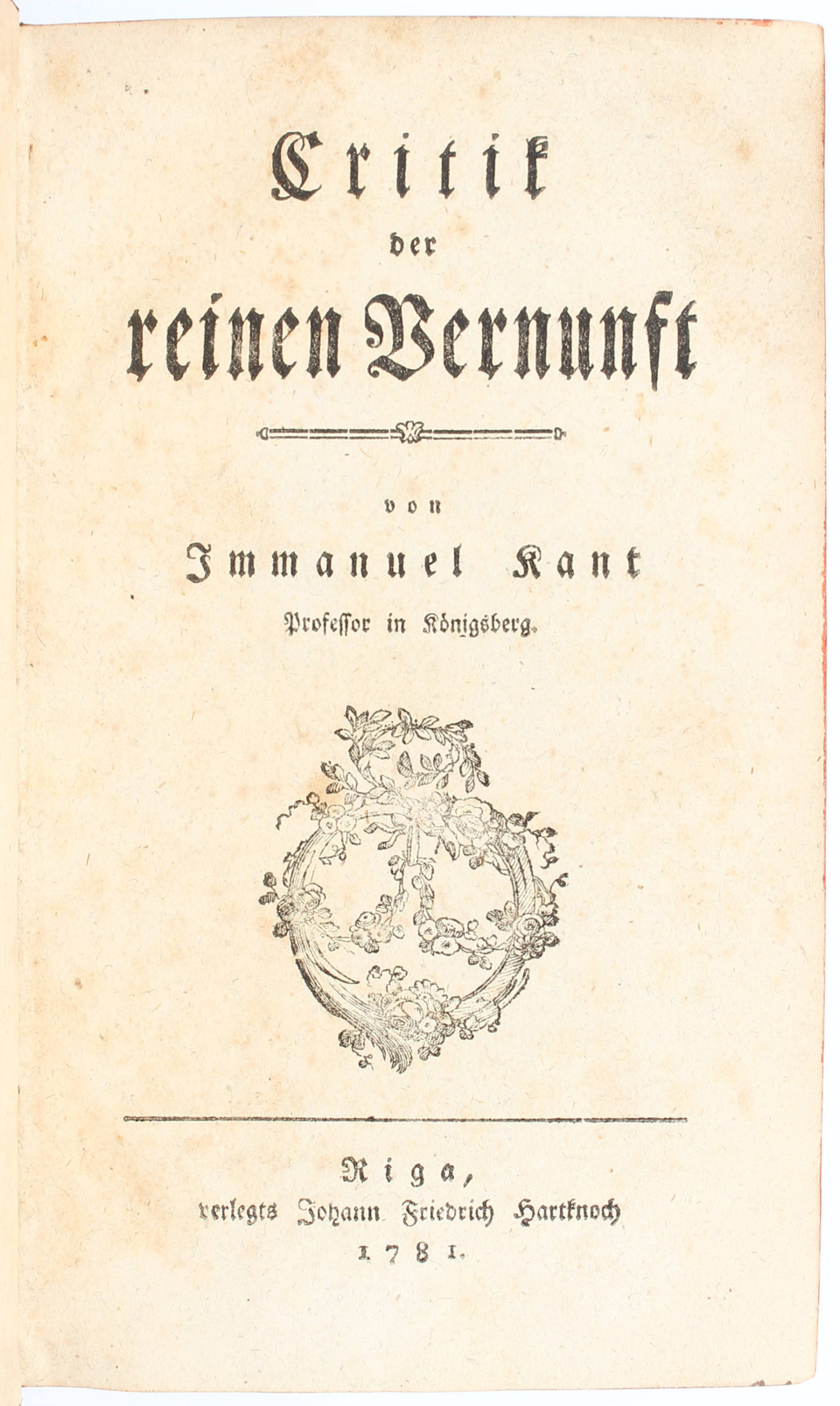
If you have ever tried reading the German philosopher’s 1781 work, you probably felt like your brain was trying to digest a brick. It is infamous for being one of the most difficult books in history. This breakdown cuts through the dense jargon and explains what Kant was actually trying to say, plain and simple.
What is the Book Actually About?
Back in the 18th century, thinkers were arguing about how human beings learn things. Some of them said we only learn through experience. The others said we are born with certain logical ideas already in our heads.
Kant stepped in to settle the argument with a middle-ground answer:
• One’s senses gather the raw ingredients: one sees colours, feels textures and hears sounds.
• One’s brain acts like a built-in filter and naturally organises that raw input into space, time, cause and effect.
Think of your mind like a pair of built-in sunglasses with tinted lenses. You cannot take the glasses off, so you can never see what the world looks like without them; you can only see the world as it appears to human eyes, not reality in its pure form.
And Why Does It Matter Today?
Kant showed that human knowledge has limits: no one can use pure logic to prove big questions like whether God exists, whether we have free will or what happens after death. These things exist outside our sensory ‘glasses,’ so we can never ‘see’ them as hard facts.
My Verdict
Kant completely changed philosophy by proving that reality and our perception of reality are two different things. While his original text is a nightmare to read, the core idea is brilliant:
We do not just passively absorb the world; our minds actually build it.