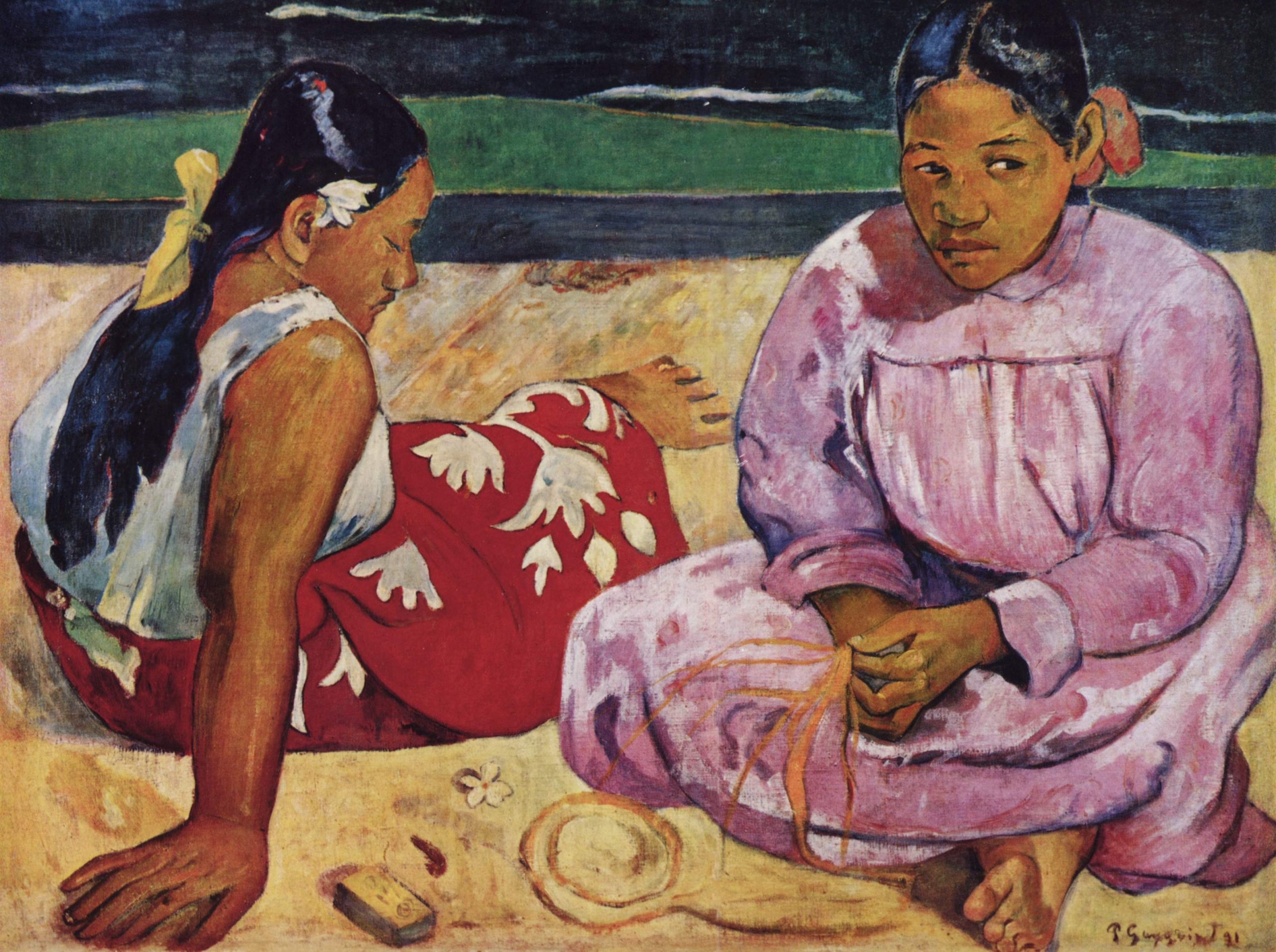
The damp, suffocating Paris cold clung to the windowpanes of Rue Vandamme like grease. The artist paced the cramped studio, his heavy boots making a dull, rhythmic scrape against the worn floorboards. In the corner sat three wooden trunks, bound in iron and canvas, waiting to be sealed.
He paused before the spotted mirror, taking in his own dark eyes, his thick hawk nose and the heavy, impatient set of his jaw. Paris felt like a grand museum where painters squabbled over crumbs of public favour like sparrows in the Tuileries. Degas had given him a loan and Mallarmé had toasted his departure at the Café Voltaire, but their voices belonged to a dying world. They spoke of his voyage as a heroic exile or a romantic madness. Let them. They did not understand that not going was the true death. Here, art had become an academic exercise, overly clever, too civilised and stripped of its vital blood.
The artist turned back to his easel. On it rested a canvas of a Breton landscape, its hills rendered in flat, bold blocks of chrome yellow and deep cobalt, outlined in heavy indigo. Brittany had been a necessary step, a place where he could still taste something primal, but even Pont-Aven had begun to feel compromised by tourists and timid painters. He needed more than a change of scenery; he needed a fresh genesis. He wanted to shed the heavy wool of Europe, the polite conversations and the overpowering shadow of the Impressionists, who painted only what they saw with their eyes, never what they felt in their guts.
Tahiti called to him not as a simple point on a map, but as a state of grace, a land of sun, myth and untamed colour where the line between the soul and the canvas would finally dissolve.
A knock echoed at the door, but he ignored it. Outside, a carriage rattled over the wet cobblestones, carrying another gentleman to another salon. He wiped his paint-stained thumb on his trousers, picked up the hammer and drove a single, decisive nail into the lid of the nearest trunk. In three days, he would board the train to Marseilles. Let Paris keep its grey twilight. He was going to paint the sun.
Paul Gauguin set sail on his first journey to French Polynesia on 1 April 1891 from Marseilles. After a sixty-nine-day voyage aboard a steamship, he arrived in Papeete, Tahiti, on 9 June 1891.