(Photo Credits, above: Bassano Ltd, Pearl Aufrere, 1911. Courtesy of the National Portrait Gallery, London)
From the limestone curves of the Venus of Willendorf to the polished marble of Michelangelo’s David, the human body has remained art’s most enduring obsession. Yet, to look at a representation of the naked human form is to participate in a sophisticated cultural dance. It is an art form that operates on a paradox: it uses our most primal, biological reality to express our most refined, abstract ideals. The art of the nude is never merely about the absence of clothes; it is an ongoing exploration of what it means to be human, balancing precariously between the sacred and the profane, the idealised and the vulnerable.
To decode the unclothed in art, we have to start with a vital distinction famously drawn by art historian Sir Kenneth Clark: the ‘nude’ is an idealisation, a means of affirming ultimate perfection, and a tangible vision of ideal beauty, though varying from culture to culture and from era to era. While to be naked means to be deprived of clothes, implying embarrassment, vulnerability, and a sudden exposure to the elements or the gaze of others; the nude, conversely, is an artistic category, a body clothed in art. In classical antiquity, particularly in ancient Greece, the nude was a garment of civic virtue and divine perfection. The Greeks did not see the sculpted athlete as stripped bare; they saw the pure manifestation of the belief that physical beauty was inextricably linked to moral excellence. The heroic male nude was a symbol of strength, rationality, and democratic pride.
However, this idealisation has historically carried a sharp gender divide. While the male nude often represented action and intellect, the female nude was traditionally positioned as an object of contemplation, desire, and nature.
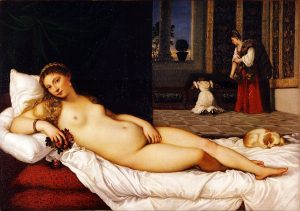
From the Renaissance onward, European oil painting established a visual language where the female subject was frequently painted to be looked at, rendered for the pleasure of a presumed male spectator. In masterpieces like Titian’s Venus of Urbino, the subject is submissive, glowing, and timeless.
Yet, the true genius of the genre lies in how artists have continuously subverted these expectations to reclaim the body’s raw humanity. When Édouard Manet unveiled Olympia, he scandalised Paris not because the woman was undressed, but because she was ‘naked’. She defied the smooth, airbrushed mythology of Venus.
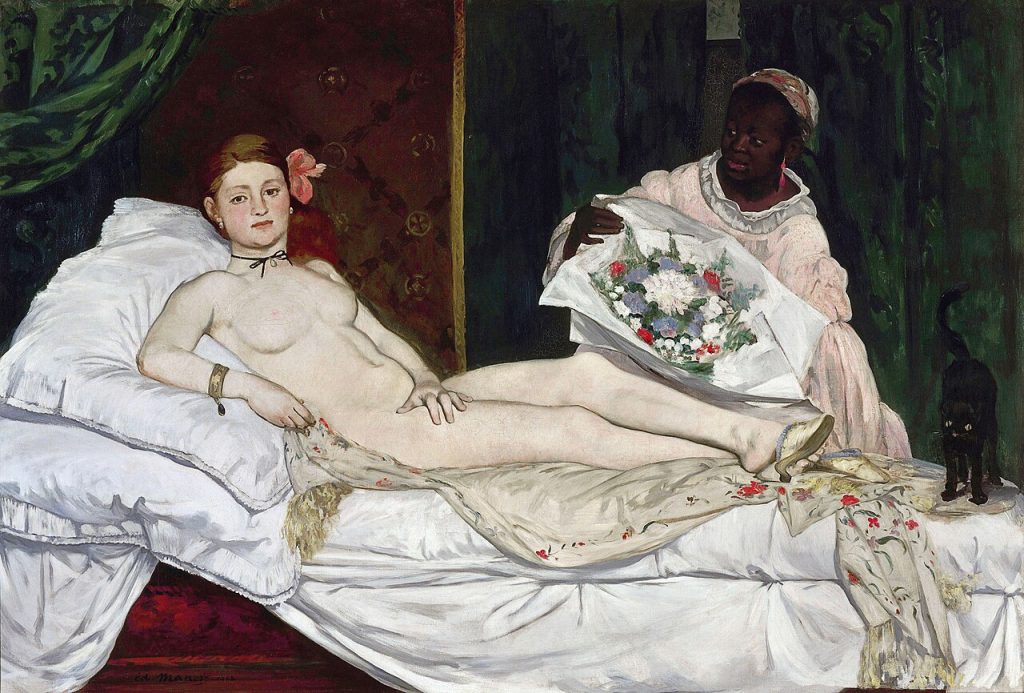
Looking directly at the viewer with a confrontational, unblinking gaze, Olympia asserted her agency, transforming the viewer from an invisible voyeur into an active participant in her reality. Conservatives denounced Manet’s Olympia as immoral and vulgar. The critics and the public condemned the work alike. Even Émile Zola was reduced to disingenuously commenting on the work’s formal qualities rather than acknowledging the subject matter. Still, in the end, he paid tribute to the painter’s honesty: ‘When our artists give us Venuses, they correct nature, they lie. Édouard Manet asked himself why lie, why not tell the truth; he introduced us to Olympia, this fille of our time, whom you meet on the sidewalks.’
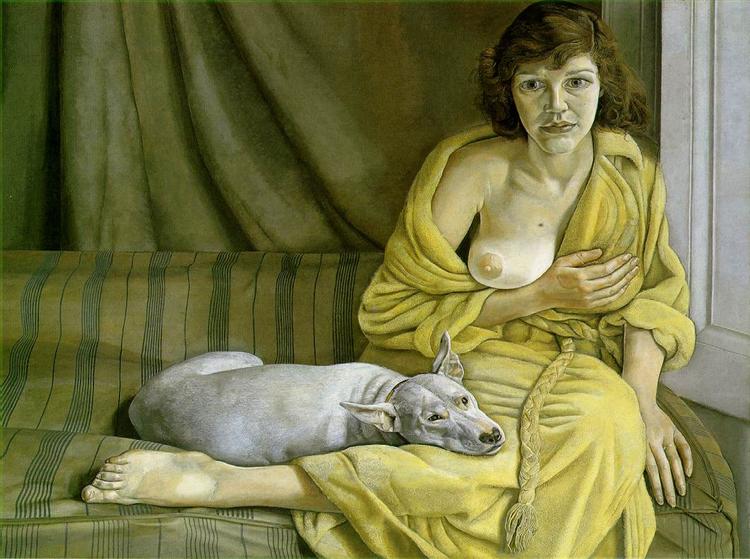
Moving into the twentieth and twenty-first centuries, the art of the nude underwent a radical democratisation. Modern and contemporary artists dismantled the classical canon to reflect a broader, more empathetic spectrum of human experience. Lucian Freud’s flesh-toned masterpieces rejected all forms of idealisation, painting the body with a brutal, forensic honesty that exposed every wrinkle, fold, and blemish.
Through his lens, the nude became a testament to mortality and the heavy weight of existence; he utilised the nude to challenge all beauty standards and reclaim bodily autonomy from centuries of colonial and patriarchal gazes.
Ultimately, the art of the nude endures because the body is our primary vehicle for experiencing the universe. It is how we love, suffer, age, and express joy. When an artist strips away the signifiers of era, class, and fashion provided by clothing, they lay bare the universal core of existence. The art of the nude is a mirror held up to humanity, a timeless reminder that our physical vessels, in all their flaws and splendours, are the ultimate canvas of the human soul.