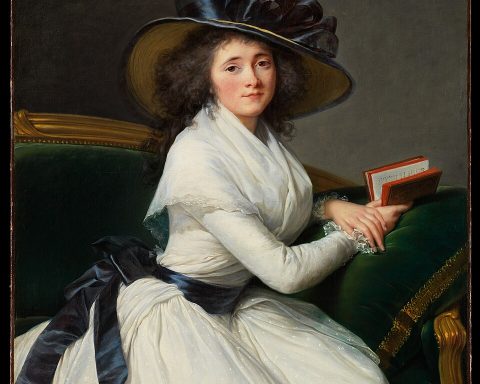
Step inside the most expensive room in human history. If you were to gather the world’s most iconic masterpieces celebrating the written word into a single physical space, the insurance policy alone could bankrupt a small nation. But we aren’t here to talk about the price tags; we are here for what these priceless canvases actually protect: the quiet, revolutionary act of reading.
Long before the glow of smartphones or the weightless convenience of e-readers, there was a deeply intimate magic to holding a story in your hands. For centuries, the world’s greatest painters and sculptors have been quietly obsessed with catching us in the act of escaping reality. This is a curated walk through a virtual, billion-euro gallery where the greatest artists in history paid tribute to our greatest obsession: The Book.
Books and brushstrokes have always shared a secret language. While writers spend lifetimes painting pictures with words, history’s greatest artists have spent fortunes trying to capture the exact, unbothered peace of a person lost in a good book.
The Ultimate Literary Art Gallery:
1. The Bookworm by Carl Spitzweg (1850, oil on canvas)
It depicts an elderly, obsessive scholar balanced precariously at the top of a library ladder, completely lost in his reading. He is holding one open book, has another tucked under his arm, a third clamped between his knees, and a fourth in his hand: A perfect definition of being consumed by books.
2. A Young Girl Reading, or The Reader (French: La Liseuse) by Jean-Honoré Fragonard (c. 1769, oil)
A Rococo masterpiece famous for its vibrant golden-yellow dress and the serene, intimate mood it creates. A young woman is shown in profile, completely absorbed in a small paperback: It highlights reading as a deeply personal, peaceful escape.
3. The School of Athens (Italian: Scuola di Atene) by Raphael (c. 1509–1511, fresco)
This is grandeur, indeed! It represents philosophy and classical knowledge, featuring ancient history’s greatest minds gathering in a magnificent library-like structure. At the centre stand Plato and Aristotle, each holding their own iconic works (Timaeus and Nicomachean Ethics)
4. The Thinker (French: Le Penseur) by Auguste Rodin (1904, bronze)
Originally designed to represent Dante Alighieri, the author of The Divine Comedy, sitting before the gates of hell, pondering his epic poem. Today, it is mostly seen as a generic symbol for philosophy or deep intellect /thinking.
5. The Librarian by Giuseppe Arcimboldo (c. 1566, oil on canvas)
The fascinating truth about it is that the original title of the painting is entirely unknown. Arcimboldo painted it while serving at the Habsburg court, but he didn’t leave a specific written note for it; the title “Librarian” is one that the modern art historians gave it, rather than the artist himself.
6. The Novel Reader (French: La Liseuse de Romans) by Vincent van Gogh (1888, oil on canvas)
Van Gogh captured this scene in Arles during a rainy week in November, a brief window that marked one of the most remarkably productive chapters of his career.
7. The Reading (French: La Lecture) by Édouard Manet (c. 1865–1873, oil)
A striking contrast to the quiet solitude of the earlier paintings, it features Suzanne, the artist’s wife, relaxing on a white sofa while her son Léon reads aloud to her from a book.
8. Lady Writing a Letter with her Maid (Dutch: Schrijvende vrouw met dienstbode) by Johannes Vermeer (c. 1670–1671, oil on canvas)
Now safely housed in the National Gallery of Ireland, this painting has a dramatic history: it was stolen in 1974 and again in 1986, though fortunately, it was recovered both times.
9. A Thousand Stories, One Life (Portuguese: Mil Histórias, Uma Vida) by Carlos de Oliveira Correia (2024, iron and steel)
Correia’s work, made of iron washers and steel, is gracing the seafront of the little coastal town of Armação de Pêra, in Silves municipality, Algarve, Portugal.
10. The Library by Jacob Lawrence (1960, tempera on fiberboard)
The painting captures the community aspect of literacy. Lawrence uses geometric shapes to depict a public library filled with people reading and sharing space; a wonderful testament to how libraries serve as democratic hubs of human knowledge.
11. James Joyce by Jacques-Émile Blanche (1934, oil on canvas)
Blanche perfectly channels the mastermind behind the masterpieces, immortalizing Joyce with his trademark round glasses, a cigarette between his fingers, and a desk stacked with books dissolving into the darkness behind him.
12. The Reader (French: La Liseuse) by Auguste Renoir (c. 1874-1876, oil on canvas)
Renoir relied heavily on the properties of oil paint to achieve this specific look. Because oils dry slowly, it allowed him to softly blend his brushstrokes, creating that smooth, radiant glow on Margot’s face and letting the dark background melt away without any harsh edges.
Marguerite Legrand, aka Margot, was a young Parisian woman who became one of Auguste Renoir’s absolute favourite and most famous models during the mid-1870s. Her presence in The Reader captures her just as the artist loved to remember her: radiant, peaceful, and beautifully illuminated by light.
At the end of the day, a hypothetical extremely rich art collector would need a bank account holding at least €1.4 billion to €2.2+ billion to fund this ultimate literary-themed gallery!