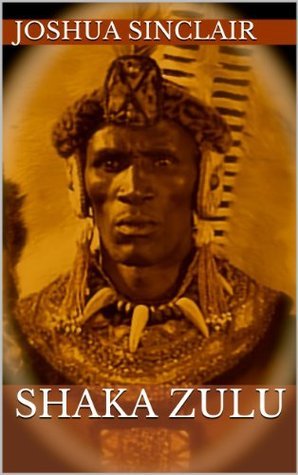
To close Joshua Sinclair’s 1985 historical fiction bestseller Shaka Zulu is to emerge from a tempest of unified force. Having recently re-read the novel, a single question has haunted me ever since:
Does Europe possess a hero of that same extraordinary grandeur?
Sinclair captures a figure who is not merely a ruler or a general, but an elemental phenomenon: a man who took a modest clan of fewer than fifteen hundred people and forged a kingdom that restructured an entire region. Shaka stands at the apex of historical mythmaking because his greatness, terrifying and awe-inspiring in equal measure, feels total. He was the chief architect of his society, its military genius, its supreme strategist and its tragic tyrant.
When asking whether Europe possesses a hero of such capability, the first step is to define which dimension of Shaka’s greatness is being measured. The book’s protagonist represents a specific archetype: the foundational conqueror who creates a nation out of raw discipline, invents a revolutionary way of war, rules with unchecked autocratic power and dies in a tragedy of his own making. He is a figure whose personality entirely subsumes the state.
European history is rich with titan figures, yet most fall short of this specific synthesis.
The Nominees:
• Alexander the Great, like Shaka, possessed an astonishing military imagination, restructured tactical doctrine and bound an empire together through sheer force of personal charisma. Yet Alexander inherited a masterfully crafted military machine from his father, Philip II of Macedon; Shaka had to invent his machine from scratch.
• Julius Caesar offers another parallel, combining military genius with profound political ambition. Yet he operated within a rich, centuries-old republican framework that he eventually dismantled.
• Charlemagne is perhaps the closest European counterpart in terms of sheer foundational violence and structural creation. Like Shaka, he was the singular pillar holding up a new regional order.
• Peter the Great of Russia comes remarkably close. He dragged a medieval nation into modernity through sheer violent force of will, rebuilt its military from the ground up, created a navy where none existed and transformed the cultural habits of his people by decree. Like Shaka, Peter was a giant of a man who ruled with absolute, unyielding ruthlessness, driving his subjects to extraordinary achievements at immense human cost.
• Napoleon Bonaparte easily matches Shaka’s operational genius and sheer historical impact. However, unlike the African hero, he was the product of a pre-existing bureaucratic state and a sprawling revolution.
Why does Shaka feel singular when reading Sinclair’s narrative? The answer lies in the nature of total statecraft. Shaka was not merely a monarch; he was the designer of every facet of Zulu existence: he reformed social structures, altered economic life through cattle distribution, redesigned weapons, established compulsory military age-grade regiments and personally directed spiritual and cultural life.
In European history, such complete control and foundational creation are usually split across centuries and divided among many leaders: a philosopher formulates the idea, a military genius wins the war and a bureaucrat builds the institutions. Shaka combined all three roles in a span of barely twelve years.