A debate is currently afoot in the world of British desserts and healthy eating. It centres on two humble yet iconic contenders: a crisp golden apple and a sweet mince pie. This conversation is less about an argument and more about a question of perspective:
What really defines the perfect bite?
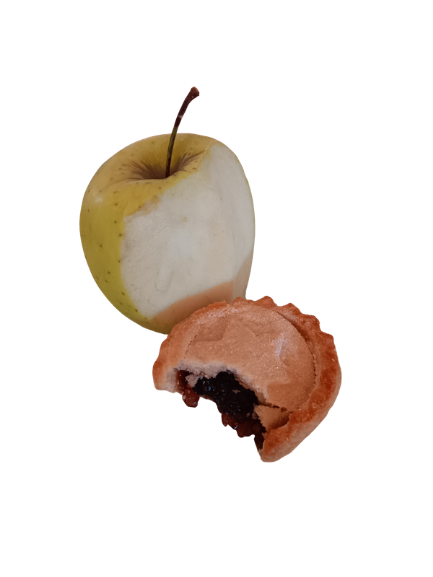
On the one hand, we have the orchard-fresh apple. Picture a perfect, firm yellow apple, perhaps a classic Golden Delicious. It’s a vision of simplicity, a raw ingredient, a wholesome snack. But look closer. This apple is incomplete. A large chunk has been cleanly carved away from its side, leaving a smooth, stark white plane of exposed flesh that contrasts dramatically with its golden skin. It seems a sacrifice, a subtraction, like a building missing an essential wing. One could almost feel sorry for it, a picture of natural perfection, interrupted. Or is it?
From another perspective, this is the very definition of freshness. It’s an ingredient ready for action. It’s a blank canvas. That smooth white surface is the promise of things to come. It’s the raw material for a delicious, warming apple crumble or the tart, essential part of a Christmas chutney. This apple is in its element, ready to be cooked down and transformed. It’s not missing a piece; it is offering its essence up for a greater purpose. Its value lies in its potential.
▼▲▼
Now, consider the opposing force. A single, perfectly formed mince pie rests nearby. It’s the perfect example of a festive treat. Its golden, slightly star-dusted pastry crust is a triumph of traditional baking. It looks complete, self-contained and ready for indulgence. Yet it, too, is incomplete. A deep bite has been taken, revealing the rich, dark, sweet filling inside. This is not a subtraction; it’s a demonstration.
This missing bite is a sign of consumption. The mince pie is not waiting to be processed; it *is* the finished article. It has reached its peak. It is a moment of pure, ready-to-eat pleasure. The bite doesn’t make it imperfect; it confirms its purpose. It shows the quality of the filling, the pastry’s flakiness, and the joy of a traditional snack, enjoyed without fuss. It’s the result of culinary effort, while the apple is just the beginning.
▲▼▲
So the debate continues:
» Does a missing piece signify incomplete potential, as with the unadorned apple, or
» Does it signify ultimate consumption, as with the pie?
» Is value found in the raw ingredient waiting to be cooked, or in the finished product, ready to be savoured?
» Is life more complete as a useful raw material or as a perfected experience?
The next time you are deciding between a piece of fresh fruit and a sweet treat, look at what’s not there. The story might surprise you. This reflection on simple British food asks whether we should focus on the wholesome starting point or the indulgent finish.
Both the orchard apple and the festive mince pie offer their own compelling answers, each with its own kind of perfect, incomplete charm.