In 1882, a young British prince penned an excited, highly confidential letter to his mother, Princess Alexandra. He wrote that while travelling through the Middle East, he had been tattooed by ‘the same old man that tattooed Papa and the same thing too, the five crosses’. The enthusiastic young royal was the future King George V and ‘Papa’ was none other than King Edward VII.
Well before body art was embraced by counterculture and rock stars, it was coveted as a deeply private and exclusive souvenir among the highest echelons of the royal families. Contrary to popular belief, they do not possess a historical aversion to ink. In fact, the British royal house enjoyed a notable period of body art enthusiasm in the nineteenth and early twentieth centuries.
How Europe Followed Britain’s Ink
When King Edward VII (then the Prince of Wales) returned from Jerusalem in 1862 with a Jerusalem Cross freshly inked onto his arm, he did more than just shock his mother, Queen Victoria. He inadvertently triggered a massive fashion trend across the royal courts of Europe.
Far from being disgusted by the British royals’ love for body art, other European monarchs and aristocrats looked across the English Channel and decided they wanted in on the action. For the next few decades, getting high-end, discreet tattoos became the ultimate status symbol for continental royalty, transforming a seafaring tradition into a playground for the elite.
The Russian Imperial Court
The most enthusiastic reaction came from the Romanovs:
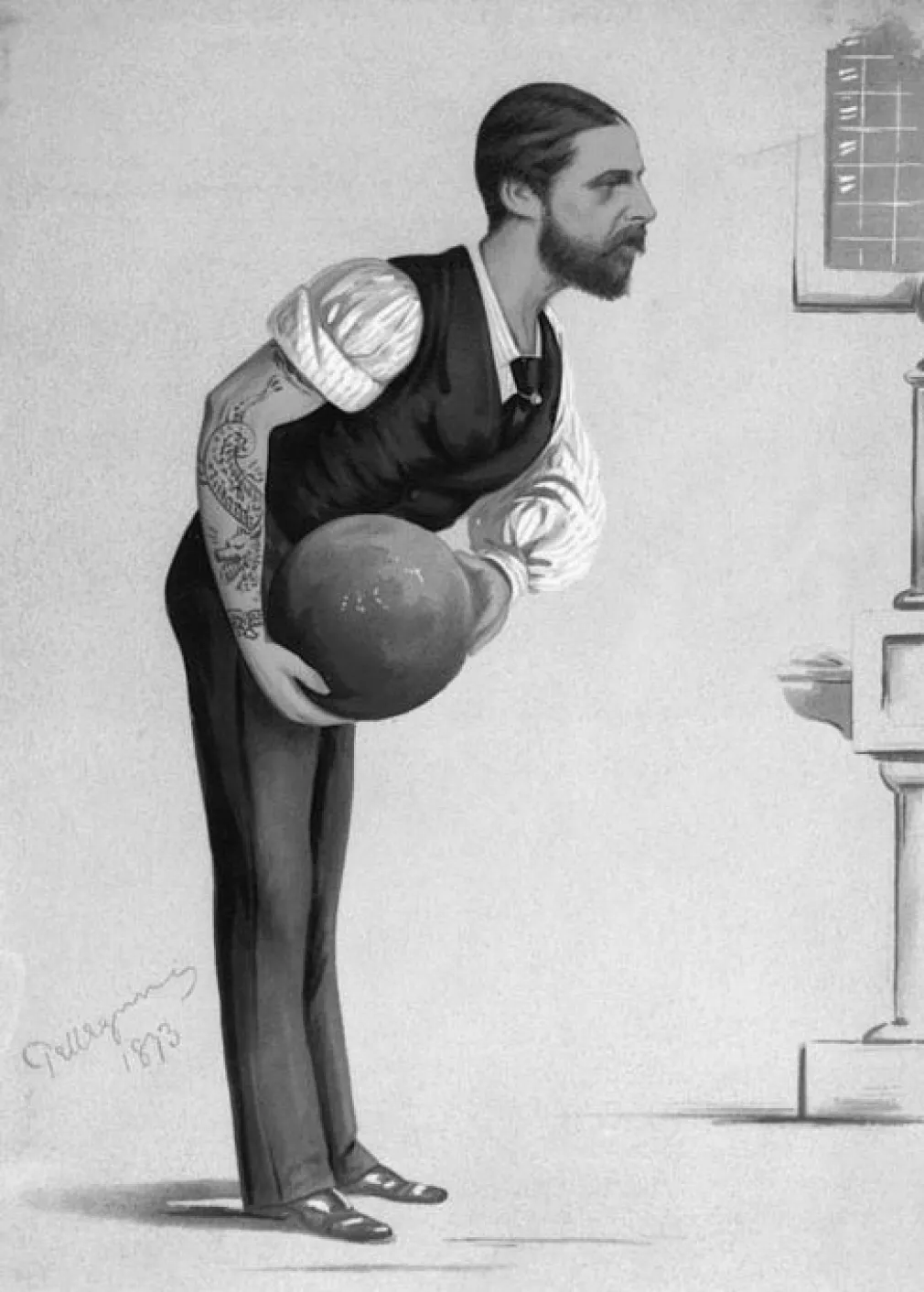
• Grand Duke Alexis of Russia: The uncle of the last Tsar became known as one of the most heavily tattooed men in European high society, allegedly collecting a massive, intricate dragon design during his global travels.
• Tsar Nicholas II: He decided to acquire his own permanent souvenir during a state visit to Japan in 1891. He sat for seven hours while a Japanese master tattooist etched a large, colourful dragon onto his right forearm.
The Scandinavians
In Denmark and Sweden, the new trend established a multi-generational royal tradition that survives to this day.
• King Frederik IX: Perhaps the most famous heavily tattooed monarch in modern history, he filled his torso and arms with extensive maritime tattoos during his service in the Danish navy.
• Princess Waldemar: Proving it was not just a boys’ club, the upper-class obsession with ink extended to royal women as well. She defied strict gender norms of the era by proudly getting an anchor tattooed on her arm to celebrate her own maritime ties.
• Princess Sofia (Sweden): Sports a sunburst symbol between her shoulder blades, a butterfly on her ribcage and a small ink design on her ankle.
Western Europe
While tattoos frequently clash with conventional expectations, nearly every sovereign dynasty across the continent features various members with subtle ink.
• Princess Stéphanie (Monaco): Has multiple pieces, including a floral bracelet on her wrist, a snake-like/dragon motif on her spine, and jumping dolphins on her foot.
• Prince Alfred, Duke of Edinburgh (UK): While his older brother (the future King Edward VII) was the first to get a tattoo in Jerusalem, Prince Alfred was the first member of the British Royal Family to be tattooed in Japan.
• Princess Eugenie (UK): Wears a tiny circle tattoo behind the ear.
• Lady Amelia Windsor (UK): The third cousin to Prince William has multiple visible tattoos, including a large tiger on her shoulder blade, which she frequently shows off during fashion events.
Rebellion Disguised as Privilege
By the turn of the 20th century, it was estimated that as many as one in five members of the European gentry had some form of body art tucked beneath their bespoke clothing. For these European royals, it was a form of controlled rebellion. Because a tattoo required the time and wealth to travel to master tattooists in remote places like Tokyo, Kyoto or Jerusalem, it became the ultimate luxury. A tattoo proved that a royal was cultured, widely travelled and secure enough in their status to bend the rules of polite society.
A Subtle Exception: Temporary and Concealed Ink
While permanent, prominent tattoos are generally avoided by active royals, temporary or hidden body art occasionally appears. During tours to nations where body painting holds cultural significance, senior figures like Queen Camilla and the Princess of Wales have gracefully accepted ceremonial henna tattoos on their hands.
Strict Etiquette and Dress Codes
The protocol surrounding royal dress codes emphasizes modesty and neatness. Formal events, state banquets and diplomatic receptions carry expectations similar to conservative corporate environments, where exposed body art is frequently discouraged. Consequently, visible tattoos can draw media scrutiny away from charitable causes and public engagements, directing focus towards personal lifestyle choices instead.
Additionally, it remains entirely possible that modern royals hold discreet, non-visible tattoos under their formal clothing; the royal standard does not explicitly prohibit personal expression.
The Sovereign Balance
The absence of visible tattoos among active royals comes down to the fundamental nature of their role. By prioritising timeless presentation and diplomatic neutrality over permanent personal expression, royalty ensures that public attention remains fixed on the Crown and the causes they represent, rather than the individuals beneath the robes.