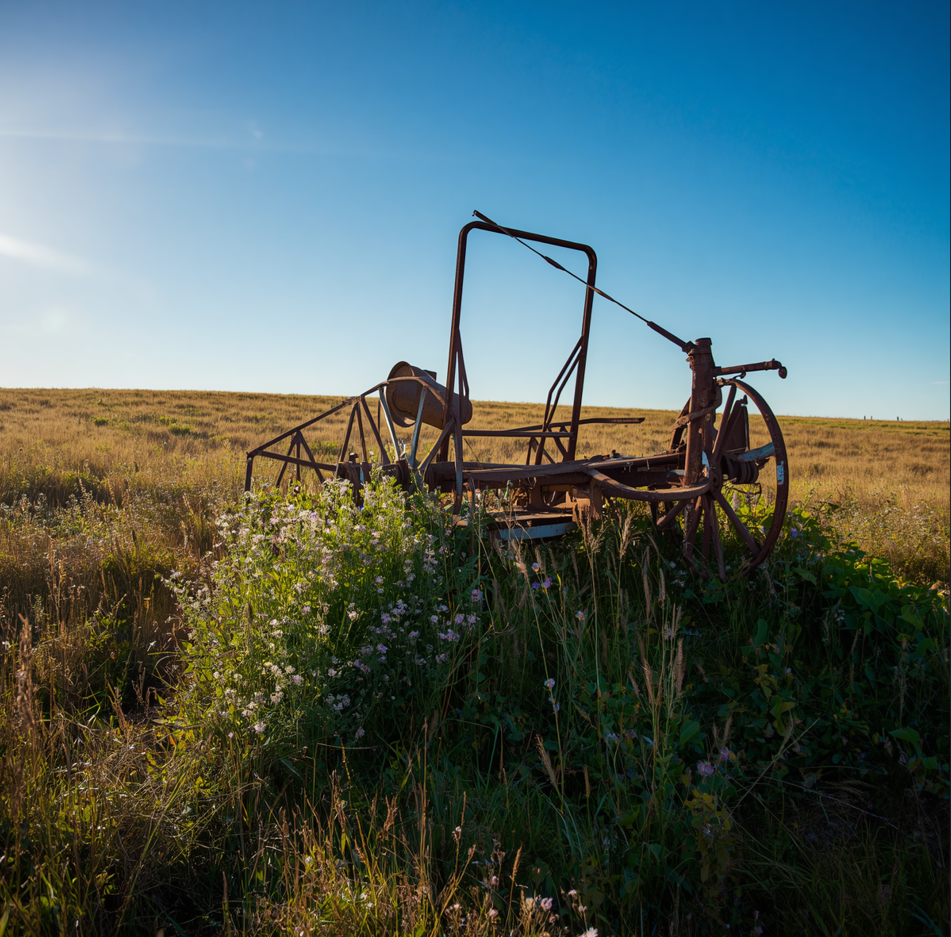
Once, beyond a hill where the chimneys of the city could be seen against the sky, there stood a farm unlike any other. It was called Human Farm. The animals had built it themselves.
For generations, they had lived under the rule of Mr Bleck, a thin, well-dressed man who owned the barns, the fields and even the scales by which their labour was measured. The horses pulled his carts. The cows filled his milk pails. The hens laid his eggs. The sheep grazed where he told them and nowhere else.
Mr Bleck rarely worked. Yet every evening he walked through the yard carrying a ledger, counting what each animal had produced.
‘Everyone must contribute,’ he would say. ‘That is the law of the farm.’
One winter, the old mare Clementine gathered the animals beneath the largest oak.
‘We are many,’ she said, ‘and he is one. Why should one creature decide what all the others deserve?’
The animals murmured. The pigs listened carefully. Among them was a clever young pig named Truffley.
‘We should govern ourselves,’ Truffley said. ‘No master. No chains. No creature above another.’
The animals cheered. They drove Mr Bleck from the farm. That night they painted a new sign above the gate:
HUMAN FARM
Beneath it, they wrote five rules.
1. All animals are equal.
2. No animal shall own another.
3. No animal shall live by another animal’s labour.
4. All food shall be shared fairly.
5. Every animal shall have a voice.
For a while, the farm was happy. The animals worked harder because the work was theirs. They held meetings beneath the oak. The hens voted on grain rations. The horses decided when the fields should be ploughed. Even the mice were allowed to speak, although everyone complained that their meetings took too long.
Truffley became one of the farm’s organisers. He was intelligent, persuasive and tireless.
‘You need someone to keep the accounts,’ he told the others.
So they gave him the ledger.
‘You need someone to organise the meetings.’
So they gave him the chair.
‘You need someone to settle disputes.’
So they gave him that authority too. Truffley accepted each responsibility reluctantly.
‘I do this only because someone must,’ he said.
Soon he had a small office in the farmhouse. Then he acquired two assistants. Then four. Then eight. The other animals began to notice that Truffley no longer attended meetings beneath the oak.
‘Why does he not come?’ asked Clementine.
‘He is too busy serving us,’ said one of his assistants.
‘But he decides the agenda,’ Clementine replied.
‘He must,’ said the assistant. ‘He understands these matters better than we do.’
Another year passed. The farm grew prosperous. Its crops were abundant and its barns were full. Yet the animals themselves seemed no richer. The horses still worked from dawn until dusk. The hens still lived six to a box. The cows still received measured portions of feed. Meanwhile, Truffley moved into the farmhouse. His office became a study. His study became a suite. His suite became a mansion. His mansion acquired carpets. When the animals questioned him, he smiled.
‘Do not confuse equality with identical circumstances,’ he said. ‘Leadership requires sacrifices.’
‘What sacrifices?’ asked Clementine.
Truffley sighed.
‘The burden of responsibility.’
The animals nodded, though none understood. One spring morning, the sheep gathered by the oak and complained that their wool was being taken without enough food in return.
‘We should vote,’ said Clementine.
Truffley appeared before them.
‘There is no need,’ he said. ‘We have already voted.’
‘When?’
‘Last month.’
‘None of us remembers.’
‘That is because the minutes were lost.’
‘Then we should vote again.’
Truffley frowned and told them that some decisions were simply too important to be left to a vote.
Yet the discontent could no longer be contained and the deep division between the ruling pigs and the exhausted beasts left the gates wide open. One crisp morning, Mr Bleck and a fresh line of men marched back over the hill with whips and ledgers, driving Truffley and his assistants from the farmhouse without a single shot being fired. The animals looked from pig to man and back to pig again, realising with heavy hearts that the new master wore the same ledger, demanded the same labour and spoke the same words.
Moral
Power does not vanish when tyrants are overthrown; it merely waits for a new caretaker to wear the old master’s shoes.